
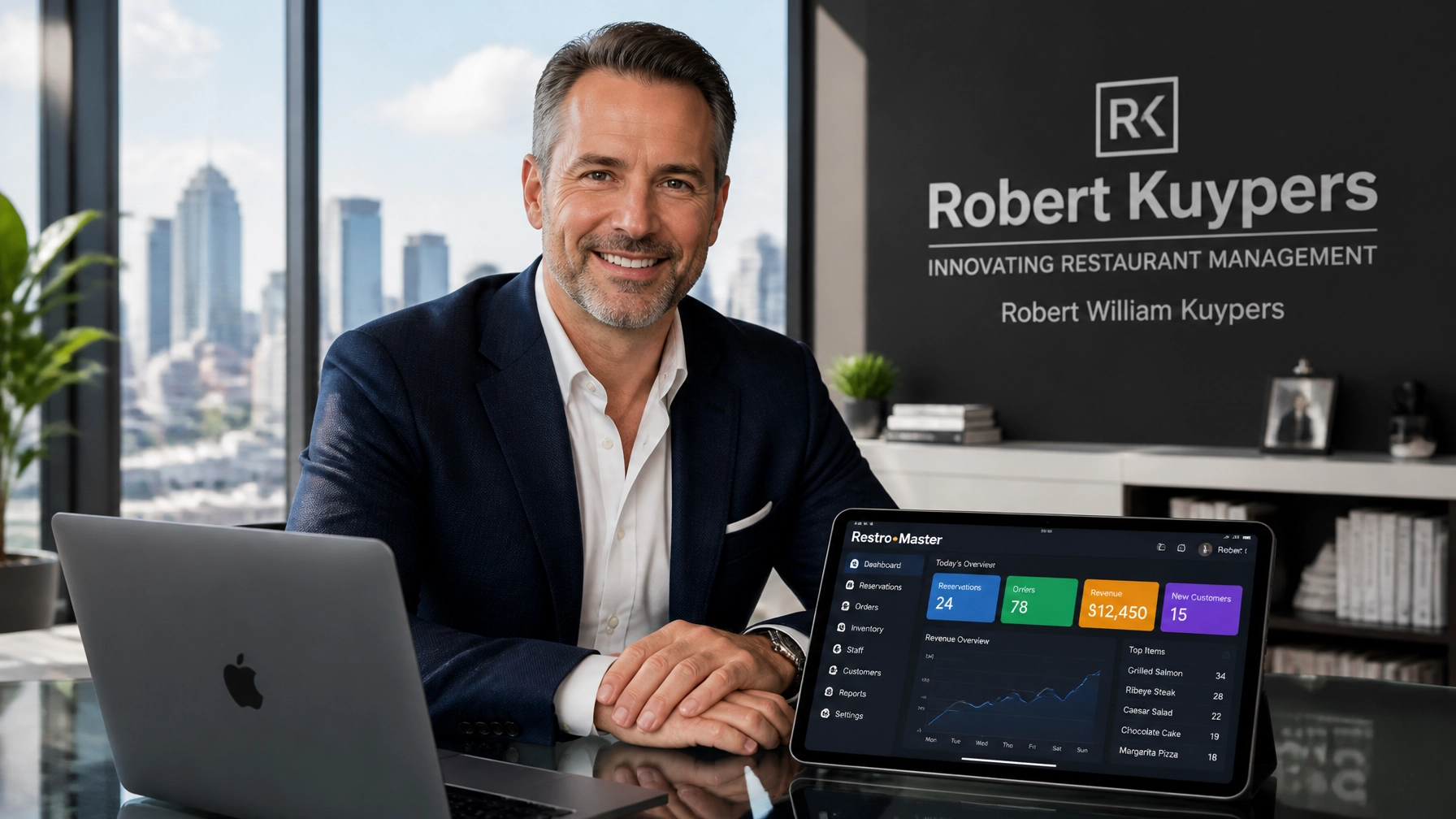
Strategic. Innovator. Futurist. These aren't just buzzwords; they are the career DNA I’ve spent over 26 years building within the restaurant industry. I don't just follow trends: I build the playbook. As a tech-marketing hybrid consultant, I’ve spent decades bridging the gap between technical vision and business execution, and right now, that gap is being filled by a tidal wave of new legislation.
If you are a C-level executive or a restaurant industry maker, you’ve likely been treating AI as a "nice-to-have" feature: a way to supercharge your loyalty program or automate a chatbot. But as we move into 2026, the game is changing. The "Digital Wild West" is closing, and the arrival of the EU AI Act and several pivotal U.S. state laws means your restaurant app development strategy must evolve or face catastrophic legal and financial consequences.
I’ve seen this industry change from paper tickets to cloud-based POS systems, and I’m telling you now: this is the most significant shift in restaurant technology consulting we have ever faced.
The Regulatory Hammer: Why 2026 is the Year of Compliance
For years, we’ve operated in a space where data was the new oil and AI was the engine. We collected, we profiled, and we targeted. But the world is catching up. The EU AI Act, which fully phases in by August 2026, is the first comprehensive legal framework for AI in the world. It classifies AI systems based on risk, and while your app might not be "high-risk" in the sense of medical devices or autonomous vehicles, the transparency requirements for chatbots and personalization engines are about to become incredibly stringent.
Closer to home, the Colorado AI Act (effective June 2026) and California’s AB 2013 are setting the pace for the United States. These laws are designed to stop algorithmic discrimination. Think about it: if your app uses AI to offer "personalized pricing" or "exclusive loyalty tiers," and that algorithm inadvertently discriminates based on neighborhood or demographic data, you aren't just looking at a PR nightmare: you’re looking at a lawsuit.
As a restaurant industry digital strategy expert, I help brands navigate these minefields before they explode. You need more than just a developer; you need a strategist who understands business execution app development.

Beyond the Code: Why "Good Enough" is Now a Liability
In the past, app developer restaurant industry projects focused on speed-to-market. "Let's get the loyalty program live, and we'll fix the bugs later." In 2026, those "bugs" could be illegal.
When I engage in strategic consulting for restaurants, I emphasize that your tech stack is your brand’s backbone. If your app’s AI-driven recommendation engine isn't transparent: meaning the user doesn't know they are interacting with an AI or why they are seeing specific prices: you are in violation of the new transparency mandates.
We are moving into an era where growth modeling for restaurants must include a line item for "Algorithmic Audit." You can no longer just "leverage" AI; you must be able to explain it. This is where the tech-marketing hybrid role becomes essential. I speak the language of your engineers to ensure the code is robust and compliant, but I also sit in the boardroom with you to ensure your brand strength isn't diluted by rigid regulations.
The Strategic Pivot: Turning Regulation into Reputation
I’ve always believed in the "shortest path" to success. Right now, the shortest path to market dominance isn't avoiding regulations: it's mastering them. Imagine a world where your digital marketing for restaurants strategy includes a "Privacy and Ethics" badge that actually means something.
When you work with me, we don't just "comply." We leverage these regulations to forge deeper trust with your guests. By being transparent about how you use AI to improve their dining experience, you aren't just checking a legal box; you are amplifying your brand's integrity.
I’ve spent my life in this industry: from the floor of high-volume kitchens to the boardrooms of global chains. I have direct relationships with almost every C-level executive in the industry, and the consensus is clear: those who wait for the regulators to knock are already too late.

Fatherhood, Legacy, and the Ethics of Innovation
On a personal note, as a single dad, I think about the digital world my kids are growing up in every day. Whether I’m at home trying to master a new mixology recipe or helping my kids with their homework, I’m constantly reminded that the tech we build today is the legacy we leave for them tomorrow.
I want to know that the AI serving my kids: or your customers: is fair, safe, and transparent. That’s why I’m so passionate about executive networking for restaurants and connecting leaders who want to do things the right way. We aren't just building apps; we’re building the future of hospitality.
My approach is fiscally conservative but socially liberal. I believe in the power of the free market to innovate, but I also believe we have a social responsibility to protect our users. Whether it’s supporting the liberation of Venezuela or ensuring our tech isn't being used by bad actors in Russia, I stand for progress, science, and the defense of democratic values.

How to Prepare for the AI Regulatory Shift
If you want to stay ahead of the curve, here is the playbook I recommend:
- Audit Your AI Use-Cases: Map out every instance where AI touches customer data, from your chatbot to your growth modeling software.
- Demand Transparency from Vendors: If you are using third-party tools for digital marketing for restaurants, ask for their compliance certifications regarding the EU AI Act and Colorado AI Act.
- Hire a Tech-Marketing Hybrid: Stop hiring "just an agency." You need a restaurant technology consultant who can translate technical risk into business opportunity.
- Prioritize Business Execution: The best code in the world is useless if it doesn't align with your strategic goals and legal obligations.
Let’s Forge the Future Together
The complexity of restaurant app development has tripled in the last six months. You don't need another vendor; you need a partner who has been in the trenches and knows the view from the top. I have live apps in the App Store, a lifetime of restaurant expertise, and the strategic vision to ensure your brand doesn't just survive this regulatory shift: it thrives.
I invite you to explore my services at RobertWKuypers.com and see how we can supercharge your brand strength while navigating the complexities of the modern tech landscape.

Let’s not just follow the trend. Let’s build the playbook.
Forward-looking. Collaborative. Unapologetic.
( Robert W. Kuypers)