
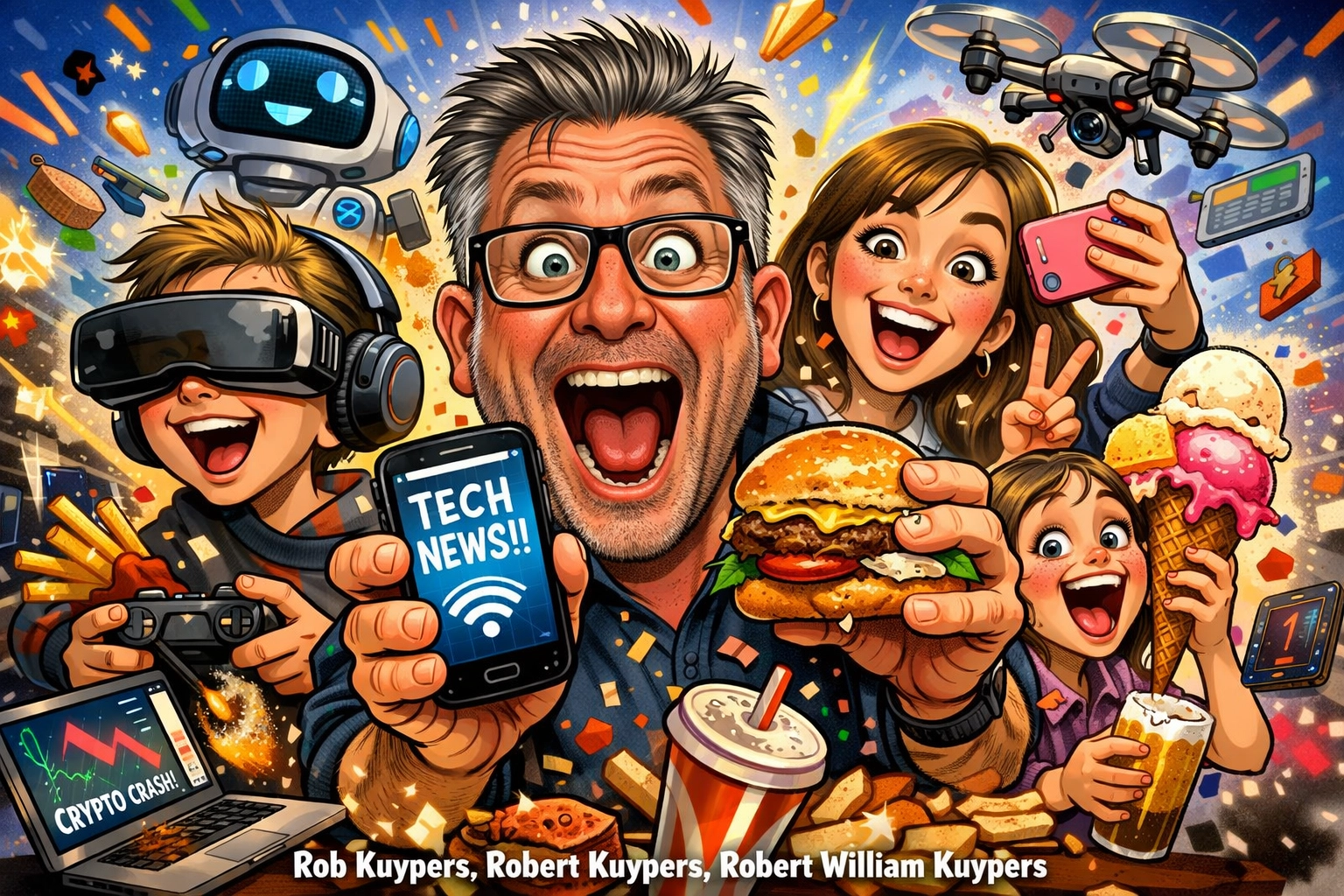
Here's the reality: restaurant technology in 2026 isn't about flashy robots or sci-fi kitchen gadgets anymore, it's about what actually moves the needle on labor costs and revenue. And as someone who's spent years building apps, consulting on strategy, and yes, actually running restaurant operations while simultaneously managing the chaos of three kids who think "dinner time" means "negotiate like hostage negotiators," I've got opinions.
Let me decode what's actually happening in the tech world today, strip away the hype, and tell you what a restaurant dad who builds software for a living actually thinks about it all.
AI Stopped Being Optional About Six Months Ago
McDonald's and the major chains aren't piloting AI anymore, they're running it live. Drive-thru ordering, kitchen monitoring, order accuracy checks, it's all happening right now, not in some "future of food" sizzle reel. And here's the kicker: 87% of restaurant operators are already using AI.
But they're not using it for the sexy stuff. They're using it for menu optimization, reservations, and inventory management. Why? Because it works. Not because it looks good in a press release, but because it solves the unglamorous, margin-killing problems that keep operators up at 3 AM staring at spreadsheets.

I get it. When you're trying to figure out if you have enough chicken tenders to make it through Friday night rush while also remembering which kid has soccer practice and which one "forgot" their homework folder in the car again, you need systems that just handle it. AI that optimizes your inventory isn't revolutionary, it's survival.
This is the un-sexy truth about technology in 2026: the winners aren't the ones adopting the newest AI toy. They're the ones ruthlessly connecting what they already have and sweating margins on what they sell.
Self-Service Isn't About Replacing Humans Anymore
Here's where the narrative shifted, and most people missed it: self-service ordering stopped being about labor savings alone.
Kiosks and mobile ordering platforms now drive measurable ROI that has nothing to do with headcount. Operators are reporting 63% increases in average check size through upsell prompts, 82% faster service speeds, and 70% higher guest satisfaction. Translation? These aren't cost-cutters anymore, they're revenue channels.

I've watched this evolution firsthand. When we built ordering systems five years ago, the conversation was always "How many cashiers can we eliminate?" Now? It's "How do we get the customer to add that side of fries and upgrade to the large drink without feeling like we're pushing?" The tech got smarter. The strategy got smarter. The margins got better.
And as a dad who's used every drive-thru app known to mankind while wrangling kids in the backseat demanding "no pickles" and "extra sauce" in increasingly specific negotiations, I can tell you: the customer experience actually got better, too. Nobody misses waiting in line to verbally repeat their order three times.
The Unglamorous Workhorse Nobody Talks About
You know what tech doesn't get headlines? Labor management platforms.
Over a quarter of restaurants now use POS systems for scheduling and labor-saving tools. Not because it's exciting. Because unpredictable staffing directly kills margins. Platforms like Toast and 7shifts handle this through real dashboards, not guesswork. They predict rush times, auto-schedule based on actual traffic data, and flag labor cost overruns before they happen.
This is the stuff that matters. This is what keeps the lights on. This is what lets you actually go home at a reasonable hour instead of manually building next week's schedule on a clipboard at 11 PM.

As someone who's built workforce management tools and tried to explain to a six-year-old why Daddy has to look at "the computer" one more time before bedtime, I can tell you: integration beats innovation every single time. A system that talks to your POS, your scheduling, your inventory, and your payroll is worth ten times more than the shiniest new AI chatbot that does none of those things.
What's Still Hype (And What I'm Ignoring)
Let's be honest: robotics are still prototype-stage. White Castle's "Castle of Tomorrow" and Hyphen's automated makelines are lighthouse projects. They're cool. They're impressive. They're not yet proven at national scale or economic break-even.
Investing heavily in kitchen robotics today is like buying a concept car, you're paying for the future, not the present. And if you're running on restaurant margins, you don't have concept car money.
What else is hype? Adding tool #15 to your tech stack without integrating tools 1-14. Most restaurants juggle separate systems for reservations, ordering, loyalty, and payments, and none of them talk to each other. The real win in 2026 isn't buying the newest platform. It's connecting the ones you already have into one unified guest history.
Because here's the thing: personalization at scale, where your system knows I always order extra hot sauce and my kids always want chocolate milk, doesn't happen by magic. It happens when your data actually flows between systems instead of living in twelve disconnected silos.
The Three Things That Actually Stick
After watching this industry evolve, building apps for it, and living in it as both an operator and a dad who needs dinner on the table by 6:30 or all hell breaks loose, here's what I know actually works:
1. Contactless mobile ordering reduces peak-hour chaos and speeds table turns. It's not about COVID anymore, it's about efficiency and customer preference.
2. Real-time inventory tracking tied to POS stops profit leakage. If you're running out of your most profitable menu item and don't know it until Saturday night, you're leaving money on the table.
3. Personalization at scale (Thanx, Toast, Olo) recommends the right item to the right guest without feeling spammy. Done right, it feels like great service. Done wrong, it feels like targeted advertising. The difference is integration and data quality.

The Restaurant Dad's Bottom Line
Technology matured from "nice to have" to "survival tool" because labor is tight, costs are unpredictable, and guests expect frictionless ordering. That's not changing. If anything, it's accelerating.
But here's my take, and I don't say this lightly: the winners in 2026 aren't the operators with the most technology. They're the ones with the most connected technology.
They're sweating margins on what they sell, not on discounts. They're using AI for the boring stuff that actually impacts P&L. They're treating mobile ordering as a revenue channel, not a labor hack. And they're integrating their tech stack so it actually talks to itself instead of creating twelve new problems while solving one.

As someone who builds these systems and uses them in real life (usually while a toddler is asking why the app won't let her order "just the toy"), I can tell you this: the gap between tech that looks impressive and tech that actually improves your operation is wider than most people think.
So when you read the next headline about AI-powered robot chefs, ask yourself: does this solve a real problem, or does it just look cool? Because in a world where margins are thin and customers are demanding, you can't afford to confuse the two.
And if you need help figuring out which tech actually moves the needle for your operation: whether that's a restaurant, a retail operation, or literally any business trying to navigate the 2026 tech landscape: you know where to find me. I'll be the guy building apps between school pickups and explaining to my kids why "the cloud" isn't actually a giant cotton ball storing our photos.
Let's build systems that actually work. Not just ones that sound good in a pitch deck.