
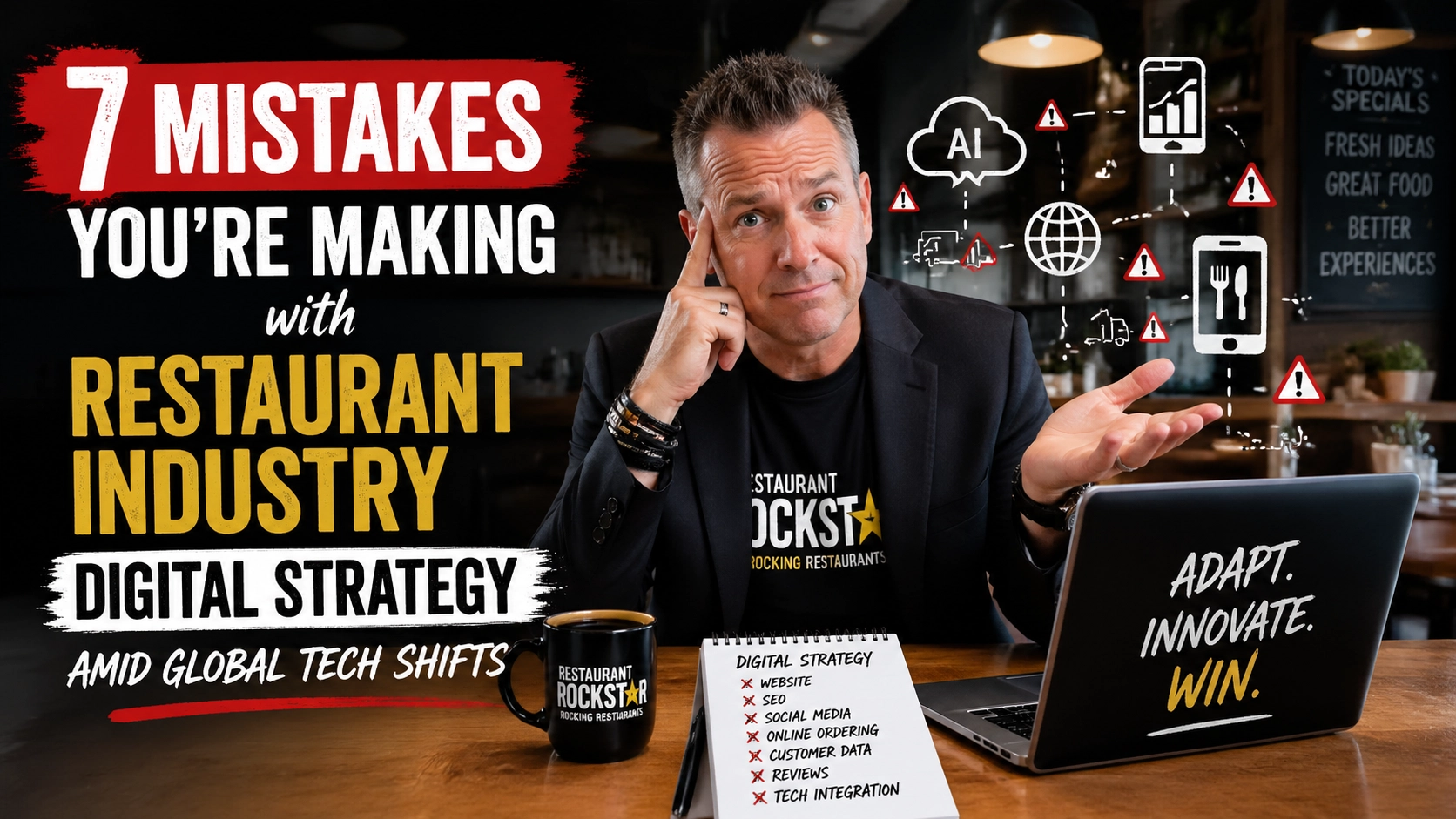
As a Strategic Innovator and Futurist in the realm of business execution app development, I’ve spent the better part of my career identifying the "shortest path" to market dominance. We are currently navigating a 2026 landscape where the intersection of global politics, AI maturity, and shifting consumer behavior has created a "perfect storm" for the hospitality sector.
If your restaurant's digital strategy feels like it's stuck in 2022, you aren't just falling behind: you are actively eroding your brand’s "digital DNA." I don't just follow trends; I build the playbook that turns chaotic tech stacks into streamlined engines of profitability. Whether I'm consulting on growth modeling for restaurants or architecting high-performance apps, I see the same recurring errors.
Here are the seven critical mistakes you are making right now, and how to pivot before the global tech shift leaves you in the rearview mirror.
1. The "Dinosaur POS" Trap: Ignoring Cloud-Native Advancement
The most foundational mistake I see as a restaurant technology consultant is the reliance on legacy infrastructure. Many operators are still clinging to on-premise servers and clunky interfaces that lack real-time syncing capabilities.
In a world where global supply chains are still feeling the tremors of Eastern European instability, your tech needs to be agile. I’m a firm believer in the resilience of Western innovation: specifically supporting the tech talent emerging from a free Ukraine: and leveraging cloud-native solutions is how we build that same resilience into our businesses. Outdated systems create operational friction. If your software isn’t cloud-based or lacks mobile integration, you are essentially trying to win a Formula 1 race in a horse and buggy.

2. Building a "Franken-stack" Instead of an Integrated Ecosystem
One of my core philosophies as a tech marketing hybrid consultant is that integration is more valuable than any individual tool. Many restaurateurs suffer from "app fatigue": they have one app for delivery, another for inventory, a third for payroll, and none of them talk to each other.
This fragmentation forces your staff to act as manual data translators. A best-in-class inventory management platform is useless if it doesn’t pull real-time sales data from your POS. When I design business execution app development strategies, I look for the "connective tissue." Without a unified ecosystem, your data is siloed, your staff is overworked, and your ROI is non-existent. We need to accelerate integration to amplify efficiency.
3. Prioritizing Volume Over Execution: The Digital Avalanche
In the early days of digital transformation, the goal was simple: get more orders. Today, raw order volume can actually be your worst enemy. If your restaurant industry digital strategy prioritizes digital demand without considering kitchen capacity, you are setting yourself up for failure.
I’ve seen too many brands destroy their reputation by allowing third-party delivery apps to flood the kitchen, resulting in 45-minute wait times for the loyal guests sitting in their dining rooms. Modern strategy requires orchestrating digital demand alongside physical capacity. I don't just advocate for "more": I advocate for "better." We must leverage smart throttling and AI-driven kitchen display systems to ensure that every order, whether digital or physical, meets the brand standard.
4. The Strategy Void: Buying Tech Without a Vision
As someone who balances a fiscally conservative approach to spending with a socially liberal approach to brand culture, I find the "shiny object syndrome" in restaurant tech particularly frustrating. Buying a random AI chatbot or a trendy kiosk system without an overarching vision is a waste of capital.
A comprehensive digital strategy must be transversal. It’s about cybersecurity, cloud architecture, and growth modeling for restaurants all working in tandem. You need a strategic consulting for restaurants partner who understands that tech is the vehicle, not the destination. I often joke that I’m a "self-proclaimed tech guru," but the reality is that I’m a business builder who uses tech to forge stronger connections between humans.

5. Making Decisions Based on "Ghost Data"
If you are still pulling reports into a spreadsheet manually at 11:00 PM on a Sunday, you are making decisions based on "ghost data": information that is already haunted by human error and delay.
Data is the oil of 2026, but only if it’s refined. Mistake number five is failing to implement automated, real-time dashboards. As an app developer for the restaurant industry, I focus on building tools that provide a "single source of truth." When you can see your labor costs, food waste, and customer acquisition costs in real-time, you can pivot instantly. We need to transform raw data into actionable intelligence. This is where strategic consulting pays for itself ten times over.
6. Ignoring the Global Supply Chain Tech Shift
We live in a world where global affairs: like the ongoing necessity to support democratic movements in Venezuela or the tech-led defense of Ukraine: directly impact the price of a head of lettuce or a side of beef. Failing to integrate your supply chain into your digital strategy is a massive oversight.
Monitoring suppliers and verifying deliveries via digital audits can save a mid-sized restaurant group tens of thousands of dollars annually. If you aren't using tech to track supplier performance and catch pricing errors, you are hemorrhaging cash. My approach is to strive for transparency throughout the entire "farm-to-app" journey.

7. Digital Aloofness: Failing the Engagement Test
The final mistake is treating your digital presence as a one-way broadcast. In the age of social media and instant feedback, you cannot afford to be digitally aloof.
I see many restaurants that have a great app but zero engagement on social platforms or review sites. Your digital marketing for restaurants must be a conversation. Whether it's responding to a Yelp review or showcasing your team's culture on Instagram, engagement builds brand equity. I believe in a "socially liberal" brand voice: one that is inclusive, energetic, and community-focused.
As a father who values work-life balance, I know that people don't just buy food; they buy experiences and values. If your digital strategy doesn't reflect the soul of your business, it’s just code.

The Path Forward: Executive Networking and Innovation
The restaurant industry is no longer just about hospitality; it’s about being a tech-enabled logistics company that happens to serve delicious food. To succeed, you need to be part of an executive networking for restaurants circle that understands these shifts.
I’ve spent years building relationships with the best in the business, from chefs to software engineers. My goal is always to supercharge brand strength by combining physical grit with digital wit. We aren't just surviving these global tech shifts; we are using them to accelerate toward a more efficient, profitable, and human-centric future.
If you’re ready to stop making these mistakes and start building a playbook for 2026 and beyond, let’s connect. Whether it's through strategic consulting for restaurants or bespoke restaurant app development, I’m here to help you conquer the market.
Let’s build the future of hospitality, one byte at a time.

Tags: Robert Kuypers, William Kuypers, Robert William Kuypers