
Strategic. Innovator. Futurist. I build playbooks for a living, digital systems, restaurant growth models, and tech stacks that keep businesses humming. I’m Robert Kuypers, and my professional superpower is turning chaos into a clean, repeatable process.
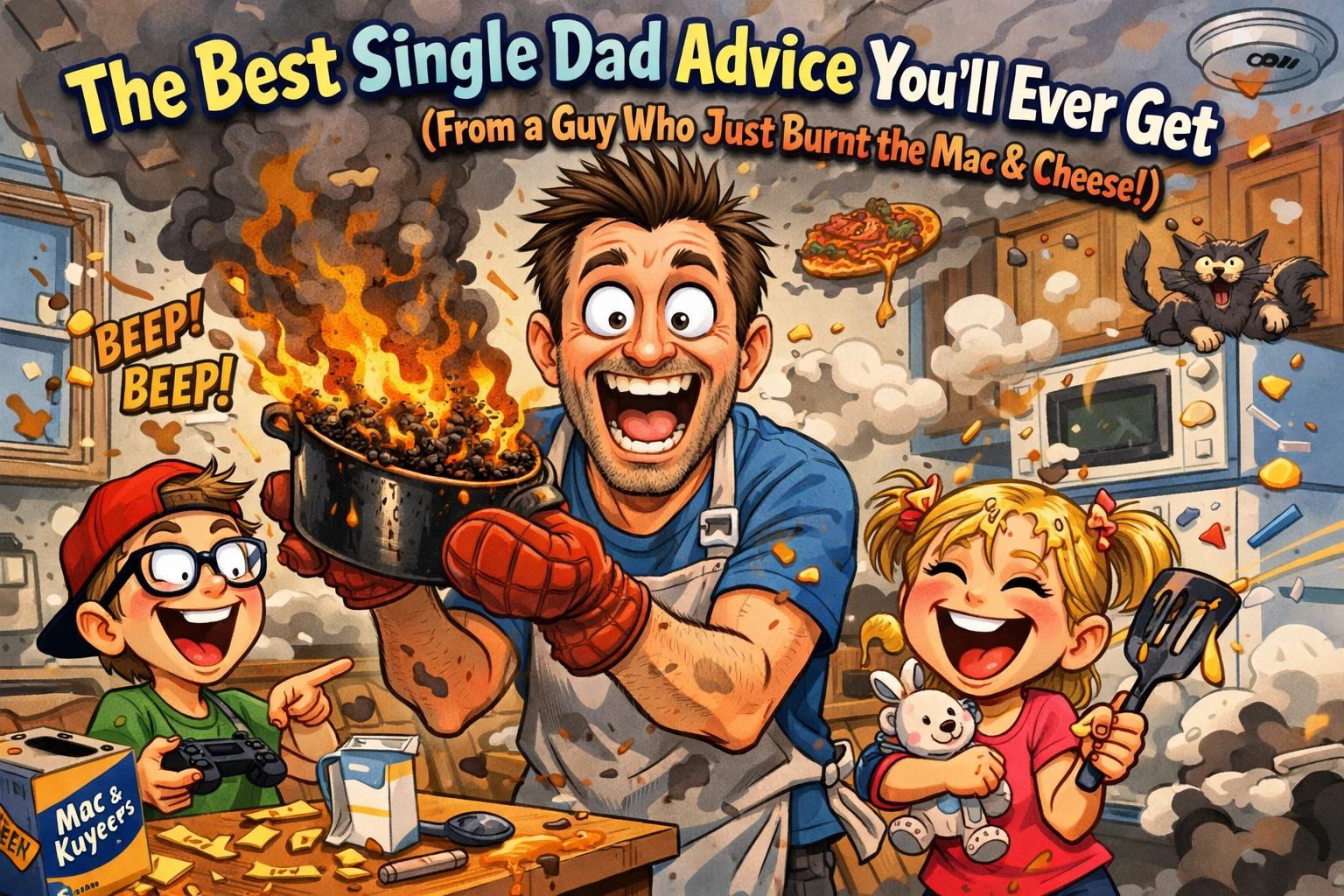
And yet… this morning I burned the mac & cheese.
Not “a little crispy.” I mean smoke detector negotiating terms burned. The kids stared at the pot like it was a crime scene. I stared at the kids like I was going to blame the pot. Then I did what every single dad does: I pivoted.
I don’t just follow trends, I build the playbook. But in dad-life, the playbook is written in crayon, revised hourly, and occasionally dunked in a cup of melted cheese. So here’s the best single dad advice I can give you, from the front lines, with zero perfection and high commitment.
1) Love Intentionally (Not Just Loudly)
Single dads get a weird cultural script: either you’re a superhero for doing basic parenting, or you’re a background character who shows up for “fun weekends.” Hard pass on both.
My north star is intentional love, specific, verbal, and real. Not “Good job.” Not “You’re the best.” But why.
- “I love how you stayed patient when your brother was annoying.”
- “I love how you tried again even after you got frustrated.”
- “I love how you’re you, no performance required.”
That kind of love becomes their inner narration later. It’s career DNA for resilience.
And yes, it’s also in the small stuff: the way you listen to their long story about a caterpillar like it’s a breaking news segment. The way you don’t multi-task them. The way you put the phone down like it’s on fire.

Practical move I use: I write one sentence on the bathroom mirror sometimes (dry-erase marker). Something simple like:
“You’re brave even when you’re nervous.”
Nobody claps. Nobody posts it. But it sticks.
The hardest sub-rule: speak respectfully about their other parent. Not because you’re “being nice.” Because you’re building their worldview. Kids internalize disrespect like it’s oxygen.
2) Lead Consistently (Because “Vibes” Don’t Raise Kids)
Here’s the trap: when you’re a single dad, you can feel like you have to make your time together feel like a theme park. You don’t. The shortest path to peace is structure.
I run companies and projects with frameworks. Parenting is no different. Not because kids are spreadsheets, but because kids relax when the world is predictable.
My best dad-life operating system:
- consistent bedtime routine
- consistent “what happens after school” rhythm
- consistent rules that apply to me too (yes, I clean up my own messes, tragic)
Consistency isn’t cold. It’s loving. It’s how you say, “I’ve got you,” without giving a speech.
And look, I still mess up. I’ll be the first to admit: I can architect a restaurant industry digital strategy that transforms customer retention… but I can also forget I put water on to boil and accidentally invent “charcoal béchamel.”
Single dad pro tip: when the day starts wobbling, don’t add more talking. Add more routine. Routine is a stabilizer bar.
3) Stop Keeping Score (It’s a Poison Calculator)
Single parenting can turn your brain into an accountant. Who did more? Who paid for what? Who missed what? Who texted first? Who “should” be doing something?
That mental spreadsheet will destroy your peace.
I don’t keep score. I keep standards. My standard is: “What response creates the healthiest environment for the kids right now?” That’s it. Not winning. Not proving. Not “gotcha.”
When I feel myself slipping into scorekeeping, I ask one question:
“Is this about my pride, or their stability?”
If it’s pride, I swallow it. If it’s stability, I handle it with calm and clarity.
This doesn’t mean you accept chaos or disrespect. It means you don’t weaponize parenting. Kids aren’t leverage. They’re people.
4) Be Present Like It’s a Board Meeting (But Way Stickier)
I’m a tech marketing hybrid consultant. I live in devices. I build systems. I love innovation. I also know the fastest way to drain connection is to be half-there.
So I run a simple policy:
When the kids are talking, the phone is face-down.
Not because I’m perfect. Because I’m intentional.
Presence looks like:
- playing the game they picked (even if it’s mind-numbing)
- cooking together (even if it ends in smoke)
- going on errands and letting them narrate life
And sometimes presence looks like letting them see you fail without melting down.
When I burned the mac & cheese, I didn’t turn it into a lecture about “paying attention.” I said:
“Yep. Dad messed up. We’re pivoting.”
We pivoted to sandwiches. I made it fun. The kids laughed. Nobody died. The kitchen still smelled like regret, but the moment didn’t.

5) Ask for Help (That’s Not Weakness, That’s Strategy)
The lone-wolf single dad thing is overrated. It’s also inefficient.
I’m in strategic consulting. If a restaurant operator tried to do everything alone, marketing, payroll, hiring, menu strategy, app development, vendor negotiations, I’d call it what it is: a bottleneck.
Same in parenting.
Help is not a moral failure. Help is capacity.
Call a friend. Trade carpool days. Ask a family member. Hire a sitter if you can. Build community like your household depends on it, because it does.
And the bonus: kids learn that strong people collaborate. That’s a life skill that scales.
6) Parent From Vision, Not Guilt
Guilt is the worst project manager alive. It’s loud, emotional, and always late with the deliverables.
If you parent from guilt, you’ll overcompensate:
- too many yeses
- too few boundaries
- too much “fun” to offset time
Here’s what I do instead: I parent from a vision of the adult I’m trying to raise.
Vision questions I actually use:
- “Am I raising someone who can handle frustration?”
- “Am I raising someone who’s kind when nobody’s watching?”
- “Am I raising someone who can do hard things without needing applause?”
When you parent from vision, you stop negotiating with guilt and start building a home culture.
Not rigid. Not harsh. Just clear.
7) Teach Life Skills Like You’re Shipping a Product (Small Iterations, Often)
In my professional world, whether it’s business execution app development or restaurant app development, you don’t wait for perfection. You iterate. You ship. You refine.
Kids learn the same way.
So instead of one giant “life skills weekend,” we do small reps:
- packing their own bag
- picking out clothes
- helping make breakfast
- cleaning up (badly) and trying again
And yes, they complain. And yes, I sometimes redo it after they go to bed like a covert operations unit.
But over time, competence grows. Confidence follows.

8) Build Your “Dad Brand” (Because Kids Trust Consistency)
I’m not talking about Instagram. I’m talking about what your kids know they can count on.
Your “dad brand” is:
- how you react when they mess up
- how you treat people
- whether your no means no
- whether your yes means yes
Kids aren’t looking for a perfect dad. They’re looking for a predictable one.
For me, that means:
- I apologize when I’m wrong (fast)
- I don’t threaten consequences I won’t follow through on
- I keep the house rules simple
And I keep the vibe light whenever possible. Because childhood should feel like childhood, not like a performance review.
9) Yes, This Connects to What I Do for Restaurants (Hear Me Out)
I know: this is a single dad blog post, not a pitch deck. But my life is one integrated system, and the overlap is real.
The same principles that make a household work are the ones I bring into my client work as a restaurant technology consultant:
-
Intentional love = customer experience by design
In digital marketing for restaurants, you don’t win with noise. You win with specific, authentic connection. -
Consistency = operational stability
A restaurant’s growth doesn’t come from one viral weekend. It comes from repeatable systems: same as bedtime. -
No scorekeeping = clean execution
In partnerships and teams, resentment kills momentum. In homes too. I focus on outcomes and health, not ego. -
Presence = real leadership
Whether it’s executive networking for restaurants or a kid telling you about their day, attention is currency. -
Iterate = scale
Growth modeling for restaurants is iterative. Parenting is iterative. You improve by doing the reps.
This is why I’m obsessed with the intersection: people + systems + technology. It’s also why I keep my consulting tone professional while my dad-life stays hilariously human.
If you want the “official” version of me (the one who wears the metaphorical blazer and talks strategy), it’s all here:
10) The Single Dad Truth Nobody Says Out Loud
Here it is:
You matter more than you think.
Not in a “you’re a hero” way. In a practical, measurable way: your involvement shapes their confidence, their boundaries, their future relationships, and the way they talk to themselves when life gets hard.
You’re not the backup parent. You’re not the “other” anything.
You’re Dad.
And if today you:
- forgot the spirit day shirt
- burned the mac & cheese
- showed up late with the wrong snack
- got a little snappy because you’re tired
…you can still win the day by doing the one thing that actually counts:
Repair. Reconnect. Repeat.
That’s the real playbook.
Tags: Robert Kuypers, William Kuypers, Robert William Kuypers
SEO keywords: digital marketing for restaurants, restaurant app development, restaurant technology consultant, strategic consulting for restaurants, executive networking for restaurants, growth modeling for restaurants, tech marketing hybrid consultant, app developer restaurant industry, business execution app development, restaurant industry digital strategy