
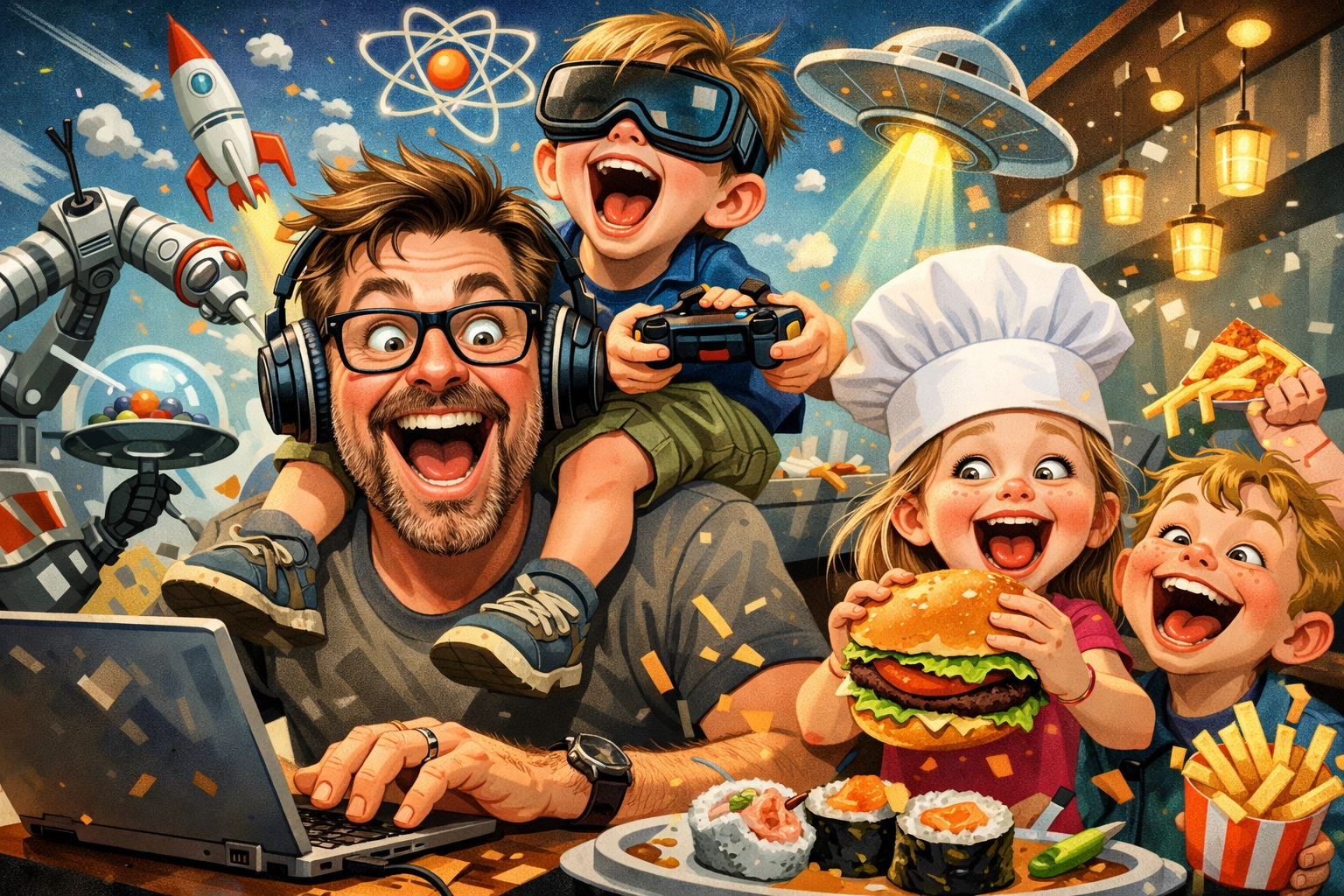
Look, I don't just consume the news, I dissect it. And today, there's a lot worth your attention. From AI quietly infiltrating your spreadsheets to the streaming wars morphing into something that looks suspiciously like the cable packages we all fled a decade ago, this Thursday has delivered some serious food for thought.
So grab your coffee (or your third one, if you're running on dad-fuel like me), and let's break down the five stories actually worth your time today.
1. AI Isn't Coming, It's Already Here, Hiding in Plain Sight
Here's the thing most people miss about artificial intelligence in 2026: the revolution isn't loud anymore. It's not about flashy chatbots or viral demos. The real transformation is happening in the background, embedded in the tools you're already using.
Your spreadsheet? It's got AI baked in. Your customer service platform? Same deal. That writing tool your team swears by? Yep.

We've moved past the "let's experiment with AI" phase and landed firmly in the "task-specific systems that actually deliver ROI" territory. This is what I've been telling my consulting clients for the past year: stop chasing shiny objects and start asking what AI can do for your bottom line today.
The enterprises winning right now aren't the ones with the biggest AI budgets, they're the ones deploying focused, reliable automation that makes their teams more productive. Not more distracted. More productive.
As a dad of three, I think about this like the difference between buying my kids every new gadget versus finding the one tool that actually helps with homework. Efficiency over flash. Results over hype.
2. Autonomous Vehicles: From Pilot Programs to Your City Streets
Self-driving cars aren't science fiction anymore. They're becoming urban infrastructure.
This year marks a significant shift: robotaxi services are moving from controlled test zones to regular city transportation in multiple markets. The AI hardware has caught up. The infrastructure is ready. And honestly? The public is warming up to the idea of not white-knuckling through rush hour.
Now, I'm not going to pretend this transition is without its growing pains. There are legitimate concerns about job displacement in the transportation sector, and we need serious conversations about how we support workers through these shifts. But here's my take: progress shouldn't be stopped, it should be managed responsibly.
The fiscally conservative approach here isn't to throw subsidies at dying industries. It's to invest in retraining programs and economic transition support that actually work. Let technology do what technology does, improve efficiency, while we ensure no one gets left behind.
And selfishly? As someone who spends way too much time shuttling kids between sports, school, and the occasional emergency donut run, the idea of a car that handles the driving while I handle the chaos in the backseat sounds pretty appealing.
3. Streaming Services Are Becoming Cable 2.0 (And I Called It)
Remember when we all cut the cord to escape bundling, limited libraries, and endless ads? Well, congratulations: we've come full circle.
Streaming platforms in 2026 are scaling back their libraries, shortening licensing windows, and leaning heavily on advertising and: wait for it: bundling. It's like the ghost of cable past showed up wearing a Netflix logo.

Here's what's actually happening: the "content at any cost" era is over. Streaming services burned through billions producing original content, and now they're tightening the belt. Which means you and I are paying the same (or more) for less content, with more ads, and increasingly being pushed toward bundles that combine services.
Sound familiar? It should.
My hot take? This isn't necessarily a bad thing. The streaming gold rush was unsustainable. Infinite content libraries subsidized by investor money wasn't a business model: it was a fantasy. What we're seeing now is the market correcting itself.
For consumers, it means being more intentional about what you subscribe to. For businesses in the entertainment space, it means doubling down on quality over quantity.
And for my household? It means finally having a legitimate excuse to cut down screen time. "Sorry kids, we don't have that streaming service anymore" hits different when it's actually true.
4. Edge AI and Hardware Accelerators: The Real Infrastructure Story
If you're not paying attention to what's happening with AI hardware, you're missing the real story.
We're moving beyond the "just make the model bigger" era. The industry is finally getting serious about efficiency, and that means ASIC-based accelerators, chiplet designs, and even quantum-assisted optimizers are maturing alongside traditional GPUs.

What does this mean in plain English? AI processing is coming to modest hardware. You won't need massive compute clusters to run sophisticated AI systems. The technology is getting democratized, and that has massive implications for small businesses, startups, and entrepreneurs who want to leverage AI without the enterprise-level budget.
At Robert W. Kuypers, this is exactly the kind of shift we help clients navigate. The companies that understand this hardware evolution will have a significant competitive advantage over those still thinking AI is only for the big players.
This is the future I get excited about: powerful technology becoming accessible to everyone, not just the giants.
5. Restaurant Industry: The Quiet Tech Revolution You're Not Hearing About
Let's shift gears to an industry close to my heart: restaurants and hospitality.
While the mainstream tech press obsesses over AI and autonomous vehicles, there's a quiet revolution happening in how restaurants operate. From AI-powered inventory management that reduces food waste to predictive analytics that help optimize staffing, technology is fundamentally reshaping the industry.

I've spent years building relationships in this space, and what I'm seeing is encouraging. Restaurant operators who embrace technology aren't just surviving: they're thriving. They're reducing costs, improving customer experience, and building more sustainable businesses.
But here's the catch: the technology only works if it serves the human element. Restaurants are fundamentally about hospitality, connection, and experience. The winning formula isn't replacing that with tech: it's using tech to amplify it.
The best restaurant operators I know are using automation to free up their teams to do what humans do best: create memorable experiences. That's the balance we should all be striving for, regardless of industry.
The Bottom Line
Here's what all five of these stories have in common: we're in a moment of maturation, not revolution.
The hype cycles are settling. The technologies that were experimental are becoming practical. The businesses that succeed in 2026 and beyond will be the ones that understand this shift: from flashy innovation to sustainable implementation.
Whether it's AI quietly improving your workflows, autonomous vehicles slowly integrating into city transportation, streaming services finding sustainable business models, hardware making AI accessible, or restaurants leveraging tech to enhance hospitality: the theme is the same: thoughtful progress beats reckless disruption.
That's the perspective I bring to everything I do, from consulting with clients to navigating the chaos of fatherhood. Strategic thinking. Measured progress. Results that matter.
Now if you'll excuse me, I have approximately forty-five minutes before the after-school pickup chaos begins, and I intend to use every second of it productively.
Until tomorrow.