
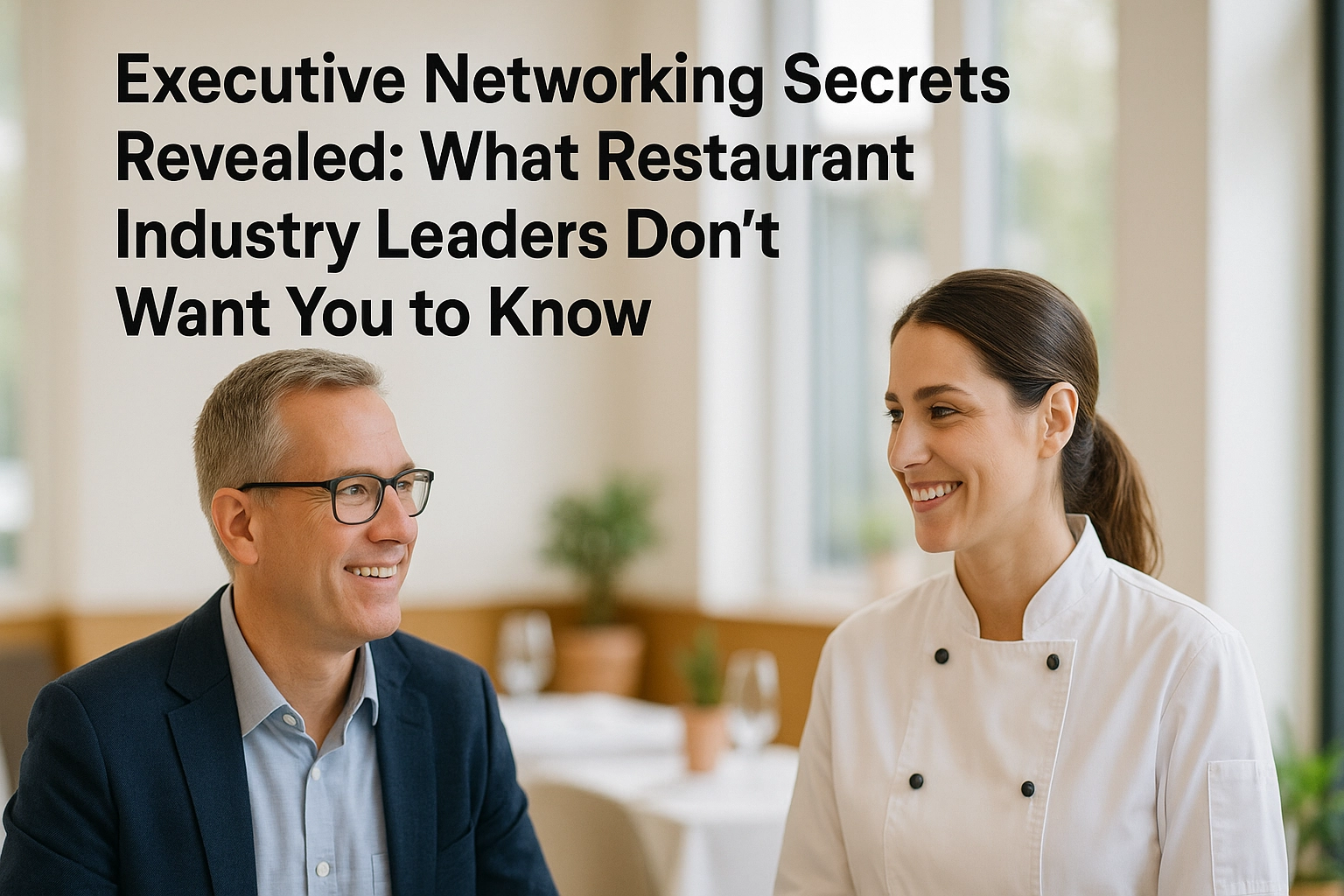
Here's the dirty little secret about restaurant industry networking: there aren't any secrets.
I know, I know. You clicked expecting some underground illuminati-level intelligence about how the big shots make deals over $300 steaks and handshake agreements in cigar lounges. The truth? Most restaurant executives are just trying to figure out how to keep their phones charged long enough to make it through another conference without their kids calling during the keynote speech asking where they put the Pop-Tarts.
Strategic networking in the restaurant industry isn't about knowing the secret handshake: it's about showing up consistently, authentically, and sometimes with visible food stains on your shirt because you grabbed lunch between meetings.
The Conference Comedy Show Nobody Talks About

You ever notice how restaurant industry conferences feel like high school reunions crossed with job fairs? Everyone's got their name tag positioned just right, clutching business cards like they're lottery tickets, and pretending they remember each other from that panel discussion three years ago about "Leveraging Social Media for Guest Engagement" (spoiler alert: nobody remembers that panel).
I watched a COO of a major casual dining chain spend fifteen minutes at a networking mixer trying to connect with what he thought was a potential franchise partner. Turns out, the guy was the hotel's banquet manager wondering why someone kept asking him about "scalable growth strategies for multi-unit operations." Classic case of mistaken networking identity.
The real networking happens in the most unexpected places: the coffee line at 6:47 AM when everyone looks like they've been hit by a truck, the Uber ride to the airport when you're sharing with three strangers who become collaborators, or standing in the hotel lobby at midnight trying to figure out how to get room service.
What They Don't Tell You About Industry Events
Most valuable conversations happen in the margins. While everyone's fighting for face time with the keynote speaker, I've built relationships with CMOs, VPs of Operations, and technology innovators just by being the guy who asks, "How's your coffee?" instead of immediately launching into my elevator pitch.
The research shows that attending industry events regularly is fundamental, but here's what they don't mention: preparation is everything, and I don't mean memorizing your company's quarterly metrics. I mean knowing that Sarah from Brand XYZ has three kids under ten and just launched a sustainability initiative, so asking about her family and environmental programs creates genuine connection points.
Follow-up within 48 hours isn't just best practice: it's survival. But forget the generic LinkedIn connection request. Reference something specific: "Great conversation about staffing challenges in suburban markets" beats "It was great meeting you" every single time.

The Single Dad's Guide to Authentic Relationship Building
Being authentic in this industry means admitting you don't have all the answers. Last month, I was on a call with a restaurant technology executive who started our conversation by apologizing for the background noise: his daughter was practicing violin. Instead of being embarrassed, he turned it into a story about work-life balance and how his company culture supports parents. That vulnerability created instant trust and led to a strategic partnership discussion.
Professional associations and specialized groups provide exclusive access, but the real value isn't in the membership directory: it's in showing up consistently to smaller gatherings. Regional hospitality councils host intimate roundtables where twelve professionals can have actual conversations instead of speed-networking marathons.
The Vendor Network Strategy Nobody Mentions
Here's something most executives overlook: your vendors are networking goldmines. That food service equipment rep who visits six restaurants every week? They know more about operational challenges and industry trends than most consultants charging $500 an hour.
I've connected with restaurant operators, fellow technology providers, and industry influencers through strategic relationships with suppliers who introduced me to their broader client networks. It's not about using people: it's about recognizing that everyone in the ecosystem benefits from quality connections.
Host specialized networking events around real problems. Instead of another generic mixer with terrible wine and worse small talk, organize roundtable discussions about specific challenges: labor retention strategies, technology integration, sustainability initiatives. Eight professionals diving deep into actual solutions creates more valuable connections than fifty people exchanging business cards.

Digital Networking That Actually Works
Online forums and platforms work when you contribute value before asking for anything. Those specialized Facebook groups and Discord communities where restaurant operators share real problems? That's where relationships start. But posting your latest blog article without context is like showing up to a dinner party and immediately trying to sell everyone insurance.
Listen first, contribute second, connect third. When someone posts about struggling with third-party delivery integration, and you have genuine insights about API management or operational workflow optimization, share knowledge generously. Those conversations turn into private messages, which turn into phone calls, which turn into business relationships.
The Communication Skills That Matter
Strong communication skills in restaurant industry networking aren't about perfecting your elevator pitch: they're about asking better questions and remembering answers. "What's keeping you up at night operationally?" opens more doors than "Let me tell you about our platform capabilities."
Active listening means putting your phone away, making eye contact, and asking follow-up questions that show you're engaged: "You mentioned staffing challenges in your suburban locations: how does that compare to your urban properties?"
Building Referral Networks That Generate Results
Referral networks happen naturally when you solve problems and create value. I don't chase referrals: I focus on helping restaurant executives achieve their goals, and referrals follow. When you help a multi-unit operator streamline their technology stack, they remember you when their colleagues face similar challenges.
The most effective referral strategy is becoming known for something specific: the consultant who understands franchise technology challenges, the strategist who helps family restaurants scale operations, the advisor who navigates complex vendor integrations.

Why Relationships Are Everything (And Sometimes Nothing At All)
Restaurant industry networking succeeds because it's fundamentally about people serving people. Whether you're connecting executives with solutions, operators with vendors, or professionals with opportunities, the common thread is improving how restaurants serve their communities.
But here's the Andy Rooney observation: sometimes the best networking happens when you're not networking at all. Taking your kids to a restaurant and chatting with the manager about operational challenges. Sitting next to an industry executive on a flight and discovering shared problems. Being genuinely curious about how restaurants work and why they matter to their communities.
Authority in this industry comes from understanding that every restaurant has a story, every operator faces unique challenges, and every solution needs to fit real-world constraints. I don't just follow trends: I help restaurant professionals navigate the intersection of technology, operations, and human connection that defines hospitality success.
The Real Secret Revealed
The only networking secret restaurant industry leaders actually keep is this: successful networking requires showing up consistently, contributing value generously, and building relationships without expecting immediate returns.
It's not about knowing the right people: it's about becoming the right person to know. Someone who understands operational challenges, appreciates the complexity of hospitality business models, and can bridge the gap between technology capabilities and real-world restaurant needs.
Strategic consulting and app development for restaurants succeeds when built on genuine relationships with operators who trust your understanding of their industry. Those relationships don't happen overnight, and they can't be forced through aggressive networking tactics.
Ready to accelerate your restaurant industry connections and transform your networking approach? Let's discuss how authentic relationship building creates lasting business opportunities. Connect with Robert W. Kuypers to explore strategic partnerships that drive real results.