
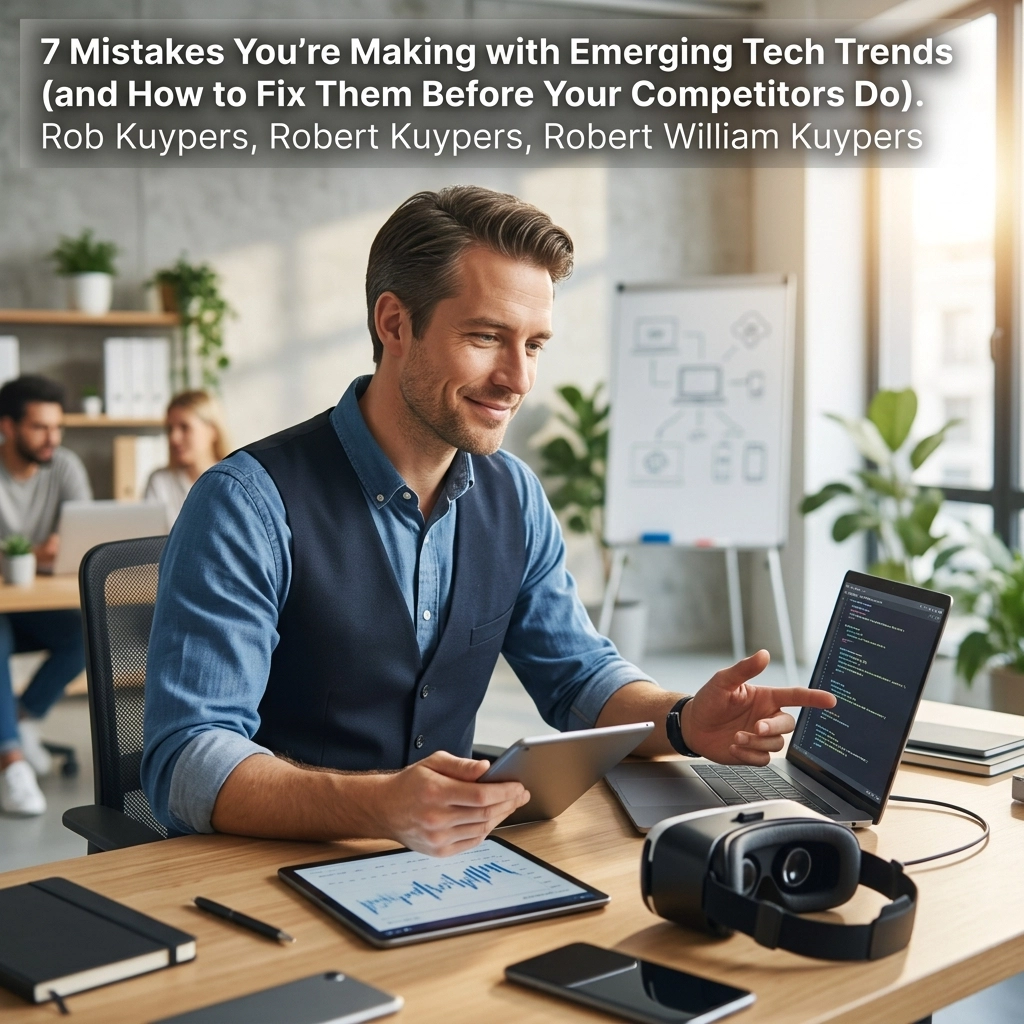
I don’t just follow trends: I build the playbook for how they actually work in the trenches of business execution. As a Strategic Innovator and Futurist, I’ve spent years observing the shortest path between a "cool idea" and actual ROI. In my career DNA, the ability to pivot isn’t just a skill; it’s a survival mechanism.
Today is Monday, April 13, 2026. We are living in an era where technology is moving at a velocity that would make a 20th-century CEO’s head spin. From decentralized AI networks to real-time supply chain transparency, the opportunities are endless. But here’s the cold, hard truth: most companies are lighting money on fire. They are chasing "shiny objects" without a map, and they’re doing it while their legacy systems are held together by digital duct tape.
Whether I’m working as a tech marketing hybrid consultant or building out restaurant app development solutions, I see the same patterns. If you want to accelerate your brand strength and outpace the competition, you have to stop making these seven critical mistakes.
1. Investing in the "Hype" Without a Clear Strategy
The biggest mistake I see? Over-investing in trendy technology because a LinkedIn influencer said it was the "next big thing." Whether it’s the latest generative AI model or a new blockchain protocol for logistics, technology is a tool, not a strategy.
I’ve seen businesses dump six figures into AI integration without asking: "What problem are we actually solving?" If you don't have a growth modeling for restaurants or retail framework, you're just gambling. At Robert W. Kuypers, I emphasize that every piece of tech must have a direct line to a business outcome.

The Fix: Start with the problem, not the solution. Before you sign that SaaS contract, define the KPI you expect it to move. If you can’t measure it, you shouldn't be buying it.
2. Misunderstanding the Role of Emerging Tech
Many leaders treat AI and automation as a magic bullet: a "set it and forget it" solution that will replace human intuition. This is a fundamental misunderstanding. Emerging tech is an enhancer, a force multiplier. It’s meant to amplify your existing talent, not render it obsolete.
As a restaurant technology consultant, I tell my clients that an app isn't going to fix bad service. It’s going to make great service faster and more personalized. We aren't just building apps; we are architecting experiences. When you view tech as a collaborator rather than a replacement, you unlock its true power.
3. Layering New Tech onto Broken Systems
This is what I call "Digital Lipstick on a Process Pig." You cannot supercharge your efficiency by layering a cutting-edge business execution app development project on top of a 15-year-old legacy system that crashes twice a week.
We see this globally. Look at the efforts to rebuild infrastructure in liberated regions or even the digital modernization efforts in Ukraine. You don’t build a smart city on top of crumbling foundations. You fix the foundation first.

The Fix: Conduct a thorough audit of your current tech stack. If your underlying processes are inefficient, automate those efficiencies first: or better yet, scrap the broken process entirely before you digitize it.
4. Ignoring Data Governance and Compliance
In our hyper-connected 2026 landscape, data is more valuable than oil, but it’s also more volatile. Adopting emerging tech without a strict data governance framework is a recipe for a PR disaster and a legal nightmare.
Whether you are implementing digital marketing for restaurants or high-level fintech solutions, you must prioritize privacy and security. We live in a world where global stability is fragile: supporting sovereign tech and secure data practices is part of being a responsible global citizen. We must ensure our tech doesn't become a tool for authoritarian overreach, but rather a beacon of transparency and liberty.
5. Prioritizing Outputs Over Business Outcomes
It’s easy to get caught up in "outputs": how many lines of code were written, how many users downloaded the app, how many AI queries were processed. But as a tech marketing hybrid consultant, I care about outcomes.
Did the restaurant industry digital strategy increase the average check size? Did it improve table turnover? Did it foster executive networking for restaurants that led to new franchise opportunities? If you aren't focused on the bottom line, you're just playing with toys.

The Fix: Align your tech team with your sales and operations teams. At Robert W. Kuypers, we bridge that gap, ensuring that every line of code serves the overarching business mission.
6. Neglecting the "Human" Side of Change Management
Technology doesn't fail; people do. Or rather, people fail to adapt to technology when they aren't properly guided. Resistance to change is the silent killer of digital transformation. If your staff is afraid that a new piece of restaurant app development is going to replace them, they will find ways to undermine it.
I believe in leadership that is both firm in its vision and empathetic in its execution. I’m a big believer in the "Commit. Train. Conquer." mentality. You have to bring your team along for the ride.

The Fix: Invest as much in training and culture as you do in the software itself. Clear communication about the "why" behind the change is the only way to forge a path forward. Show them how the tech makes their jobs easier, not harder.
7. Losing the Customer Connection in the Name of Automation
Finally, don’t let automation kill your soul. In the quest for efficiency, many brands have over-automated their customer interactions, leading to a sterile, frustrating user experience.
In digital marketing for restaurants, the human touch is everything. People don't go out to eat just for the calories; they go for the connection. If your tech creates friction instead of removing it: if a customer has to fight an AI chatbot just to change a reservation: you’ve lost.
The Fix: Use tech to personalize, not just to automate. Use data to remember a customer's favorite wine or their allergy requirements. Use technology to make them feel more seen, not less.
The Path Forward: Strategic Execution
I don't just sit in an ivory tower and theorize. I’m out here doing the work, whether it's through strategic consulting for restaurants or developing the next generation of business execution tools. I believe in a world where technology serves humanity: a world where we use our innovations to defend freedom (Slava Ukraini!) and uplift the global community.
The mistakes I've listed above are common, but they are not inevitable. By focusing on strategy, process, and people, you can leverage emerging trends to accelerate your growth and transform your industry.

We have to stay hungry and stay agile. The moment you think you’ve "arrived" is the moment you start falling behind. I’m always looking for the next challenge, the next partnership, and the next way to push the envelope.
If you’re ready to stop making these mistakes and start building a tech-forward future that actually delivers, let's talk. I don't just follow the playbook: I'm writing the next chapter.
Stay driven, stay focused, and let's conquer the future together.
Robert W. Kuypers is a Tech Marketing Hybrid Consultant and the lead at Robert W. Kuypers Strategic Consulting & App Development. When he’s not optimizing restaurant digital strategies, he’s likely at the gym, traveling for executive networking, or advocating for a more transparent and tech-empowered global society.
Tags: Robert Kuypers, William Kuypers, Robert William Kuypers