
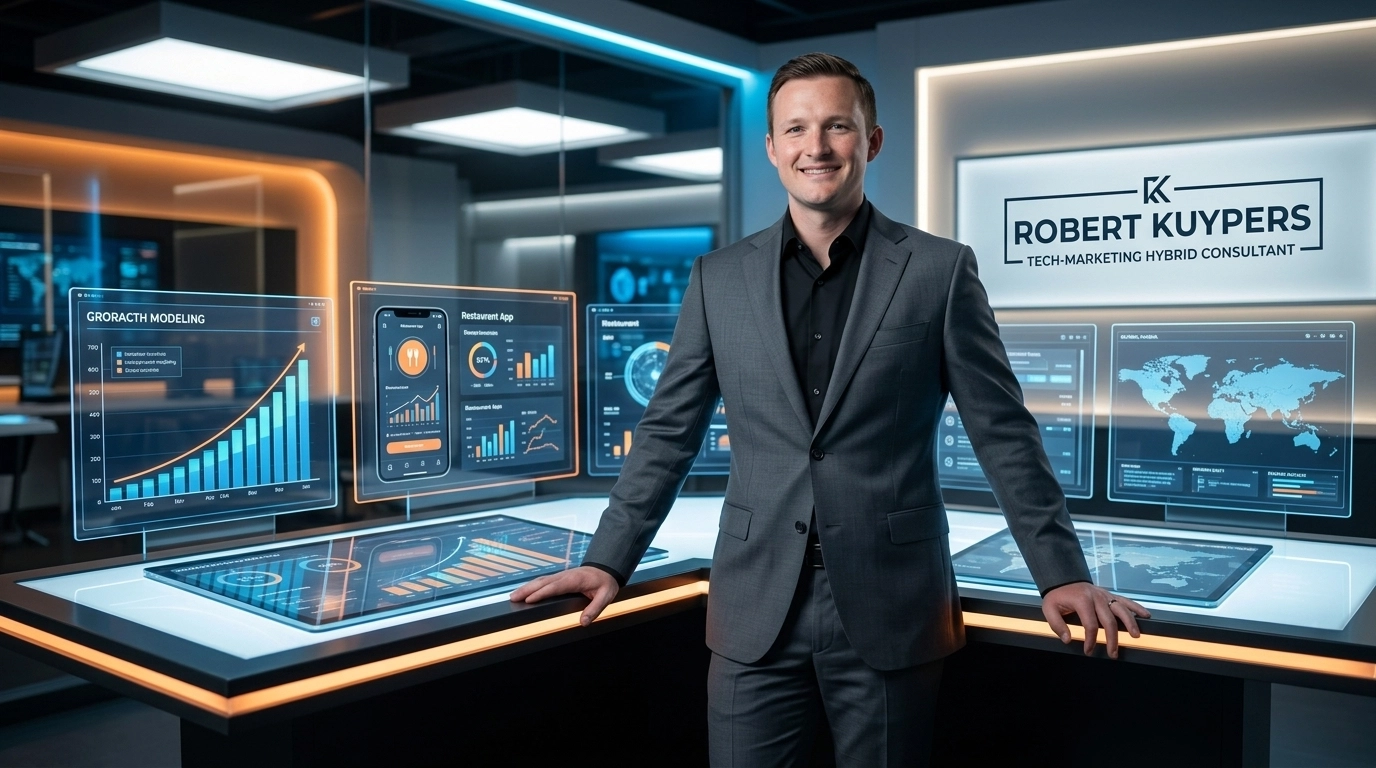
As a Strategic Innovator and Futurist with over 26 years in the trenches of the restaurant industry, I’ve seen the "next big thing" come and go more times than a seasonal menu item. But what we are witnessing in 2026 isn't just another trend: it's a fundamental shift in the restaurant industry digital strategy landscape. If you are still treating your digital presence as a side dish rather than the main course, you aren’t just behind; you’re invisible.
I don’t just follow trends: I build the playbook. My career DNA is woven into the fabric of this industry, bridging the gap between C-level executives and the technical visionaries who build the code. Whether I’m navigating complex business execution app development or forging high-level executive networking for restaurants, I strive to supercharge brand strength and accelerate growth.
However, the harsh reality is that most brands are lagging. While the global tech sector is sprinting toward autonomous systems and unified data, many restaurant chains are still fumbling with fragmented legacy systems. Let’s break down the ten reasons why your digital strategy is failing to keep pace with global tech trends.
1. Your AI is Experimental, Not Operational
While global tech leaders are using AI to automate entire supply chains and predict consumer shifts before they happen, the restaurant world is still playing with basic chatbots. True strategic consulting for restaurants today requires moving AI into the heart of operations: demand forecasting, dynamic pricing, and real-time labor optimization. I leverage cutting-edge AI to transform raw data into a roadmap for profitability, not just a gimmick.
2. The "Franken-Stack" Fragmentation
Most restaurants have a "Franken-stack": a POS from one vendor, a loyalty program from another, and a delivery aggregator that doesn't talk to either. This fragmentation is the shortest path to failure. In a world where seamless integration is the standard, your lack of a unified digital architecture is leaking revenue. You need a tech marketing hybrid consultant who understands how to stitch these pieces together into a high-performance engine.

3. Ignoring the Power of Growth Modeling
If you aren't using growth modeling for restaurants, you're flying blind. Modern tech companies don't "hope" for growth; they model it. They use predictive analytics to understand customer lifetime value (LTV) and acquisition costs (CAC) with surgical precision. My approach involves creating data-driven models that allow you to see the future of your brand before you spend a single dollar on marketing.
4. You’re Buying "Off-the-Shelf" Instead of Building Brand Equity
Many operators think that downloading a generic template app is enough. It’s not. Restaurant app development is about creating a proprietary gateway to your brand. A generic app is a commodity; a custom-built, user-centric platform is an asset. As a proven app developer in the restaurant industry with live apps in the App Store, I know that the difference between a 2-star and a 5-star experience is often the bridge between technical vision and business execution.
5. The C-Suite vs. Engineering Communication Gap
This is my specialty. I’ve seen countless projects die because the engineers didn't understand the business goals, and the C-suite didn't understand the technical constraints. To thrive, you need leadership that can speak both languages. I act as that translator, ensuring that your digital marketing for restaurants isn't just a series of "cool ideas" but a technically sound, scalable strategy that executives can get behind.

6. Lack of Global Perspective and Geopolitical Awareness
We live in a connected world. Tech trends in Europe and Asia often precede what hits the US. Furthermore, global stability affects your tech. Whether it's the resilience of software teams in a pro-Ukraine tech landscape or the supply chain shifts required to bypass aggressive regimes like Russia, your digital strategy must be globally informed. A fiscally conservative but socially liberal approach allows for the flexibility to innovate while maintaining a rock-solid bottom line.
7. UX/UI is Treated as an Afterthought
In the tech world, User Experience is everything. In the restaurant world, it’s often relegated to whoever is "good with computers." If your digital interface is clunky, your food won't save you. People expect the same friction-less experience from your app that they get from Uber or Netflix. I focus on amplifying brand strength by ensuring every digital touchpoint is intuitive, fast, and: dare I say: fun.
8. Failure to Leverage Executive Networking
Strategic growth doesn't happen in a vacuum. My direct relationships with almost every C-level executive in the restaurant industry mean I don't just see the trends: I hear about them before they happen. Executive networking for restaurants is about more than just handshakes; it’s about collaborative innovation. If you aren't part of the conversation, you're just reading about it later.

9. Data Literacy is Low at the Top
It’s not enough to have data; you have to know what to ask it. Many organizations have mountains of customer data but zero insights. A restaurant technology consultant must do more than install software; they must instill a culture of data literacy. We move from "I think our customers like this" to "The data proves our customers want this."
10. Missing the "Social Commerce" Wave
Global tech is moving toward "shoppable" everything. In 2026, your digital marketing for restaurants should include integrated social commerce: where a user can see a reel of your signature dish and order it for delivery without ever leaving the app. If your strategy doesn't account for these new revenue streams, you are leaving money on the table for your competitors to grab.
The Path Forward: Strategy Over Tactics
I don't just offer services; I offer a transformation. The restaurant industry is at a crossroads, and the "shortest path" to the top is through a sophisticated, tech-forward mindset. Whether you need strategic consulting for restaurants to overhaul your vision or an app developer to build your digital flagship, the time to act is now.

I’m Robert William Kuypers: self-proclaimed tech guru, mixology enthusiast, and dedicated father. I’ve spent my life bridging the gap between what is and what could be. Let’s stop chasing the tail of the tech world and start leading the pack.
Ready to supercharge your brand? Let’s forge the future together.