
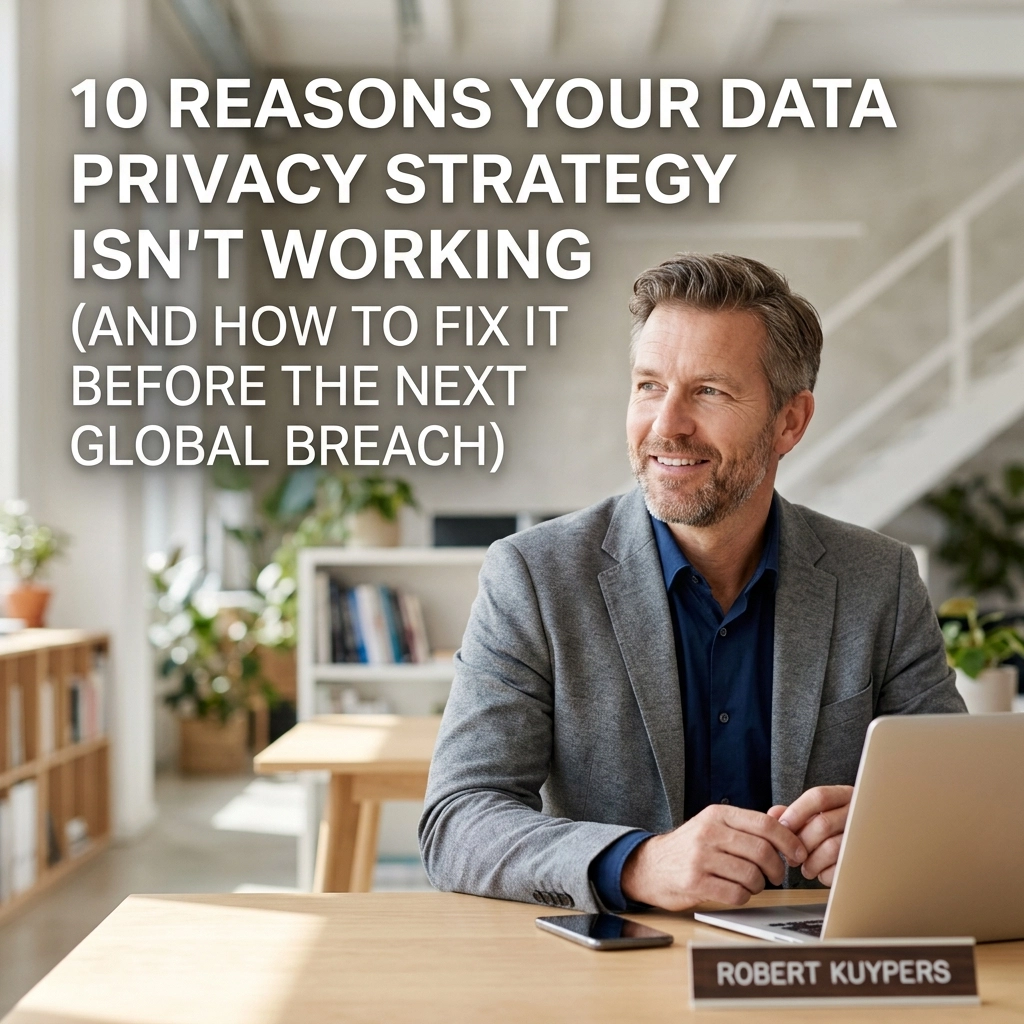
Data is no longer just a byproduct of doing business; it is the career DNA of your organization. In the volatile landscape of April 2026, where digital warfare is as common as a morning espresso and state-sponsored actors from Russia are constantly probing for weaknesses, your privacy strategy cannot afford to be a "set it and forget it" checkbox.
As a Strategic Innovator and Futurist in the realm of restaurant app development and strategic consulting for restaurants, I’ve seen the carnage left behind when a brand treats privacy as an afterthought. I don’t just follow trends: I build the playbook that prevents them from becoming catastrophes. If your current strategy feels like it’s held together by duct tape and hope, you aren't alone. But in an era of global breaches, "hope" is not a growth model.
Here are the 10 reasons your data privacy strategy is currently failing and exactly how I leverage my expertise as a tech marketing hybrid consultant to accelerate your recovery.
1. Zero Executive Buy-In (The "Compliance as a Chore" Trap)
The shortest path to a catastrophic breach is a leadership team that views privacy as a legal hurdle rather than a competitive advantage. If your board sees GDPR, CCPA, or the latest 2026 federal mandates as "stuff the IT guy handles," you’ve already lost.
Privacy requires champions. Without a restaurant technology consultant who can speak the language of ROI and risk mitigation to the C-suite, your initiatives will always be defunded in favor of flashier marketing gimmicks. Growth modeling for restaurants must include a line item for security because you cannot grow a brand that the public no longer trusts.
2. Education That Stops at the "Onboarding" PDF
If your employee privacy training is a five-minute video they watched two years ago, your staff is your biggest liability. In the fast-paced world of restaurant industry digital strategy, team members are constantly handling sensitive guest data, from loyalty points to dietary restrictions and payment info.
I’ve found that the most effective way to amplify security is through continuous, bite-sized education. When employees understand why a Data Subject Access Request (DSAR) matters, they stop sidestepping vendor reviews. I strive to make security part of the culture, not just a line in the manual.
3. The Transparency Gap
Modern consumers are savvy. They know their data has value. When a restaurant app is vague about how it uses location data or sharing habits, it creates friction. Transparency isn't just about legal compliance; it’s about supercharging brand strength.
As a strategic consulting for restaurants expert, I advocate for radical honesty. Tell your guests exactly what you collect and why. Use clear, human language: not legalese. When people feel in control of their information, they are more likely to engage with your digital marketing for restaurants.

4. You’ve Lost the Map (Data Flow Blindness)
You can't protect what you can't find. Many organizations are operating in a fog, unaware of where their sensitive data actually resides. Is it in an AWS bucket? A legacy CRM? A shared Excel sheet on a manager’s laptop?
Effective business execution app development requires comprehensive data mapping. We need to know which third parties: from delivery aggregates to payroll processors: have access to your data. I specialize in identifying these accountability gaps and closing them before a hacker finds them for you.
5. Overexposed Access and "Legacy" Rights
The primary cause of accidental breaches isn't a shadowy figure in a hoodie; it’s an ex-employee who still has admin access to your POS system. Misconfigured access controls: like "all employees" folders: are the low-hanging fruit for bad actors.
I am a proponent of the "Principle of Least Privilege." Restrict data access based strictly on job necessity. As a tech marketing hybrid consultant, I perform audits that strip away unnecessary permissions, ensuring that only the people who need the data to drive growth can see it.
6. Cloud Misconfigurations: The Silent Killer
In our rush to embrace restaurant app development, many brands move to the cloud without hardening their configurations. "Anyone with the link" is perhaps the most dangerous phrase in modern business. These links often lack expiration dates and stay active for years.
We must treat our cloud infrastructure like a high-performance machine. It needs constant tuning and monitoring. I help clients implement automated expiration dates and hardened access controls to ensure that their digital transformation doesn't become a digital disaster.

7. Data Hoarding (The Retention Rot)
Fiscally conservative management dictates that we should only keep what we need. Yet, many businesses retain customer data indefinitely because they lack a disposal policy. This isn't just inefficient; it’s a massive liability. If you don't have the data, it can't be stolen.
I help brands establish strict retention schedules. If a guest hasn't visited in five years, why are you still holding their home address? Growth modeling for restaurants should prioritize clean, relevant data over a massive, decaying database.
8. Excessive Collection Without Purpose
Just because you can collect a data point doesn't mean you should. Collecting unnecessary info: like a user's social media handles for a simple table reservation: erodes trust and makes you a bigger target for cyberattacks.
I apply data minimization principles to every project. We focus on the data that actually moves the needle for your digital marketing for restaurants. Everything else is just noise and risk.
9. Outdated Policies in a Moving World
The digital landscape of 2026 moves at light speed. If your privacy policy hasn't been updated since 2024, it’s a relic. As your data practices evolve: perhaps you've integrated new AI-driven restaurant technology consultant tools: your policies must reflect those changes.
I conduct regular audits to ensure there is no gap between what your policy says and what your app actually does. Consistency is the bedrock of strategic consulting for restaurants.
10. Treating Compliance as a "One-Time Project"
This is the most common mistake. Organizations treat privacy like a sprint: they check the boxes for a deadline and then go back to business as usual. But privacy is a marathon. It is an operational discipline that requires continuous monitoring, incident response drills, and executive networking for restaurants to stay ahead of new threats.
I don't just help you get compliant; I help you stay resilient. We build systems that are pro-self-defense, reflecting a commitment to protecting our clients and their customers from global instability.

The Fix: Integrating Strategy and Execution
Fixing a broken privacy strategy isn't just about hiring a lawyer; it’s about hiring a tech marketing hybrid consultant who understands the intersection of code, culture, and commerce. I leverage my years of experience in app developer restaurant industry roles to ensure that security is baked into the user experience, not bolted on as an afterthought.
We live in a world where the conflict in Ukraine has shown us how vital digital sovereignty and data protection are. While I am socially liberal: believing in the inherent right to privacy and individual freedom: I am fiscally conservative when it comes to risk. Wasteful data practices are a drain on your resources and a threat to your longevity.
Why It Matters Now
The next global breach isn't a matter of "if," but "when." Whether it’s a state-sponsored attack or a simple cloud misconfiguration, the brands that survive will be the ones that treated privacy as a core value.
I’ve spent my career helping leaders forge new paths in the restaurant and tech sectors. Whether it’s through executive networking for restaurants or high-level strategic consulting, my goal is to accelerate your growth while safeguarding your reputation.
I don't just offer advice; I offer a partnership in business execution app development. We will build a strategy that is as robust as it is innovative, ensuring your restaurant group isn't just surviving the digital age, but leading it.

If you’re ready to stop reactive firefighting and start proactive building, let’s talk. The "shortest path" to security isn't a shortcut: it’s a superior strategy.
Check out my latest insights and services at robertwkuypers.com and let's transform your digital presence today.
Tags: Robert Kuypers, William Kuypers, Robert William Kuypers