
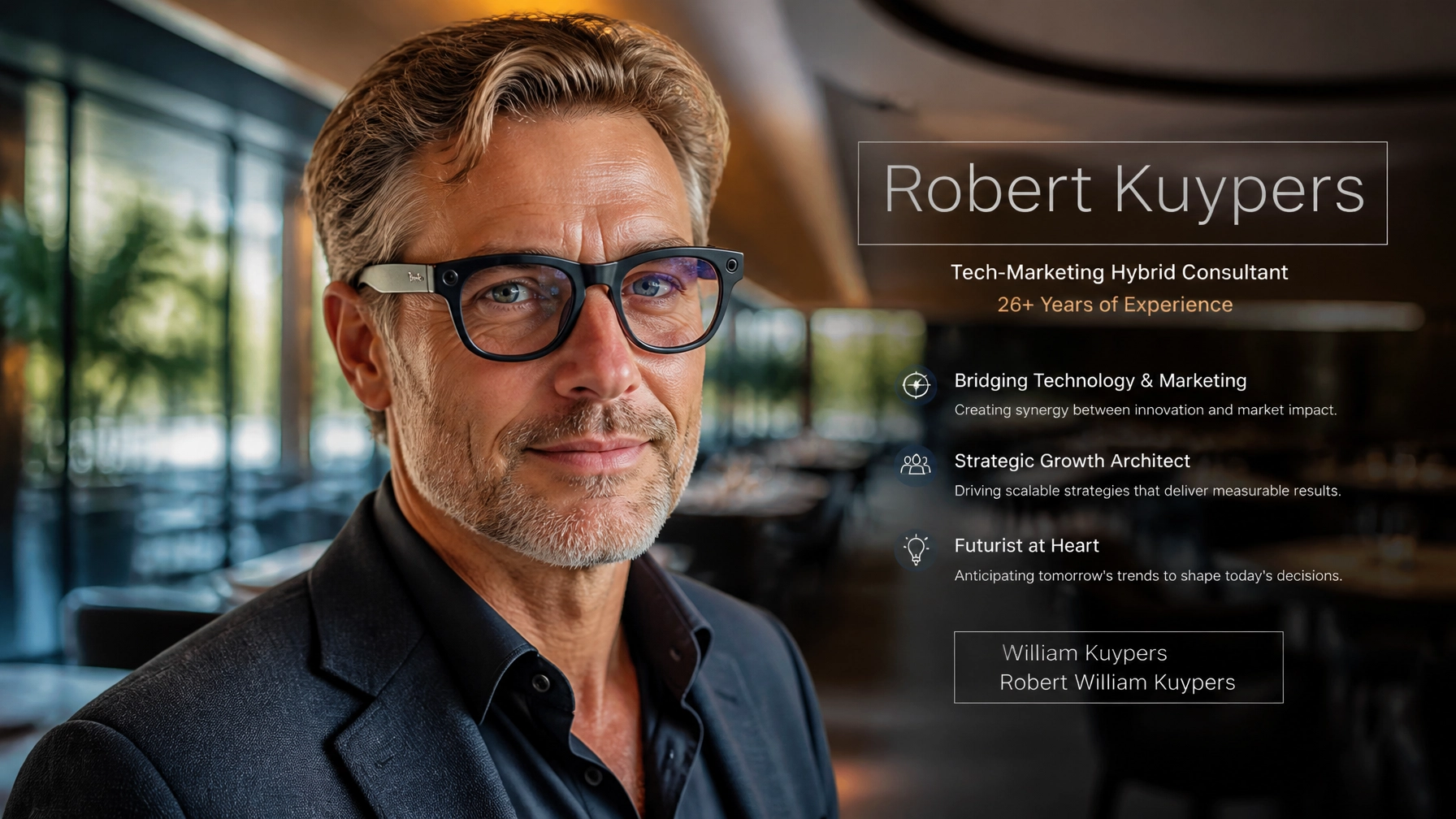
The future isn’t knocking; it’s already sat down at the table, ordered a double espresso, and is looking at your menu through a pair of multimodal AI sensors. As a Strategic Innovator and Futurist who has spent over 26 years navigating the trenches of the hospitality industry, I’ve seen every "next big thing" come and go. But this? This is different. Meta’s latest foray into smart glasses isn't just another gadget for the tech-obsessed; it’s the career DNA of the next generation of restaurant app development.
If you aren’t looking at how wearable AI will transform your restaurant industry digital strategy, you aren’t just behind the curve, you’re standing on the wrong track while the high-speed rail is barreling toward you. I don’t just follow trends; I build the playbook. And the playbook for 2026 is being written in the field of view of a pair of Ray-Bans.
The Death of the "Glass Slab" Mentality
For a decade, restaurant app development has been trapped in a four-inch by six-inch rectangle of glowing glass. We’ve optimized, we’ve UX-tested, and we’ve polished mobile interfaces until they shine. But let’s be honest: reaching into your pocket, unlocking a phone, and tapping through three menus just to see if a dish has gluten is a friction point. In the world of business execution app development, friction is the enemy of profit.
Meta’s smart glasses introduce a "see what I see" multimodal AI. Imagine a guest looking at your physical menu and simply asking, "Hey Meta, which of these is the best seller for someone who hates cilantro?" The AI reads the menu, cross-references your database, and whispers the answer in their ear. This isn't science fiction; it’s the new baseline for digital marketing for restaurants. We are moving from "Mobile First" to "Context First."
The Strategic Pivot: Operations at the Speed of Sight
As a tech-marketing hybrid consultant, I bridge the gap between technical vision and C-level execution. While the marketing teams are drooling over the guest-facing potential, the real growth modeling for restaurants happens in the Back of House (BOH).

Think about training. The turnover in this industry is a beast that eats margins for breakfast. Using smart glasses for staff training creates the shortest path to competency. Instead of a thick manual or a boring tablet video, a new line cook can wear glasses that overlay plating instructions directly onto the counter. "Place the micro-greens here," the glasses say, highlighting the exact spot.
This level of strategic consulting for restaurants isn't just about making things "cool"; it’s about the fiscal conservatism of reducing waste, lowering training costs, and ensuring that your brand strength is maintained across 500 locations. We are talking about restaurant technology consultant work that actually impacts the bottom line.
Executive Networking and the Power of Real-Time Data
In my years of executive networking for restaurants, I’ve sat with the titans of this industry. The one thing they all want? Clarity. They want to know what’s happening on the floor without being on the floor.
With smart glasses, "management by walking around" gets a digital supercharge. A floor manager can look at a table and instantly see, via an AR overlay, that Table 12 has been waiting 15 minutes for their entrees or that the guest at Table 4 is a VIP who prefers a specific vintage of Bordeaux. (And speaking of Bordeaux, as a self-proclaimed tech guru with a penchant for high-end mixology, I can tell you that getting the drink order right the first time is the ultimate loyalty program.)
A Global Perspective: Innovation as a Tool for Freedom
We live in a world where technology is more than just a tool for commerce; it’s a tool for liberation. While we watch the brave people of Ukraine resist a stagnant, authoritarian Russian machine, we see the power of decentralized technology. Innovation thrives in open, liberal societies. Just as we strive for the liberation of Venezuela and the spread of democratic values, we must recognize that the "Old Guard" of closed-off, legacy systems is dying.
In my practice, I adopt a socially liberal approach to technology: it should empower the individual, whether that’s a guest wanting an inclusive dining experience or a server wanting to do their job more efficiently: while remaining fiscally conservative in ensuring every tech stack pays for itself.

Building the Playbook for 2026
If you are an app developer in the restaurant industry, your job description just changed. You are no longer building buttons; you are building "intent triggers."
- Voice-First Integration: If your app doesn't have a robust API for voice commands, you are building a relic.
- Visual OCR Optimization: Your physical menus and signage need to be "machine-readable" for AI glasses. This is a key part of restaurant industry digital strategy.
- Real-Time Data Streams: The glasses need to talk to your POS, your inventory, and your CRM in milliseconds.
This is where my 26+ years of expertise come into play. I’ve lived the restaurant life, from the grease traps to the boardrooms. I understand that a "tech solution" that adds ten seconds to a server's workflow is a failure. I specialize in the business execution of app development, ensuring that the high-tech "futurist" vision survives the messy reality of a Saturday night rush.
The Dad Factor: Why Relatability Matters
As a single dad, I know that the best technology is the one that stays out of the way. When I’m out with my kids, I don’t want to be buried in my phone. I want to be present. Smart glasses allow us to stay connected to the information we need: whether it’s a work alert or a nutrition check for a picky eater: without breaking the human connection.

Whether it's laughing over a messy meal with my kids or navigating the complex landscape of strategic consulting for restaurants, the goal is always the same: supercharge brand strength through authentic, frictionless experiences. We don't just follow the trend of wearable tech; we leverage it to forge deeper connections between brands and humans.
Accelerate Your Brand’s Future
The gap between "technical vision" and "business execution" is where most restaurant groups fail. They buy the shiny object but don't know how to integrate it into their growth modeling. They hire an agency that knows code but doesn't know what a "par level" is.
I am the tech-marketing hybrid consultant who speaks both languages. I can talk Python with your engineers and EBITDA with your CFO. I have the direct relationships with the C-level executives who are making these decisions today, and I’m ready to help you build the next chapter of your digital story.

The world is moving fast. The Russian tanks of legacy thinking are being picked off by the Javelins of innovation. Don't be the one clinging to a 2015 digital strategy in a 2026 world. Let’s transform your approach. Let’s amplify your reach. Let’s forge a path to profitability that looks as good through a pair of smart glasses as it does on a balance sheet.
Are you ready to build the playbook? Let’s connect.
Tags: Robert Kuypers, William Kuypers, Robert William Kuypers.