
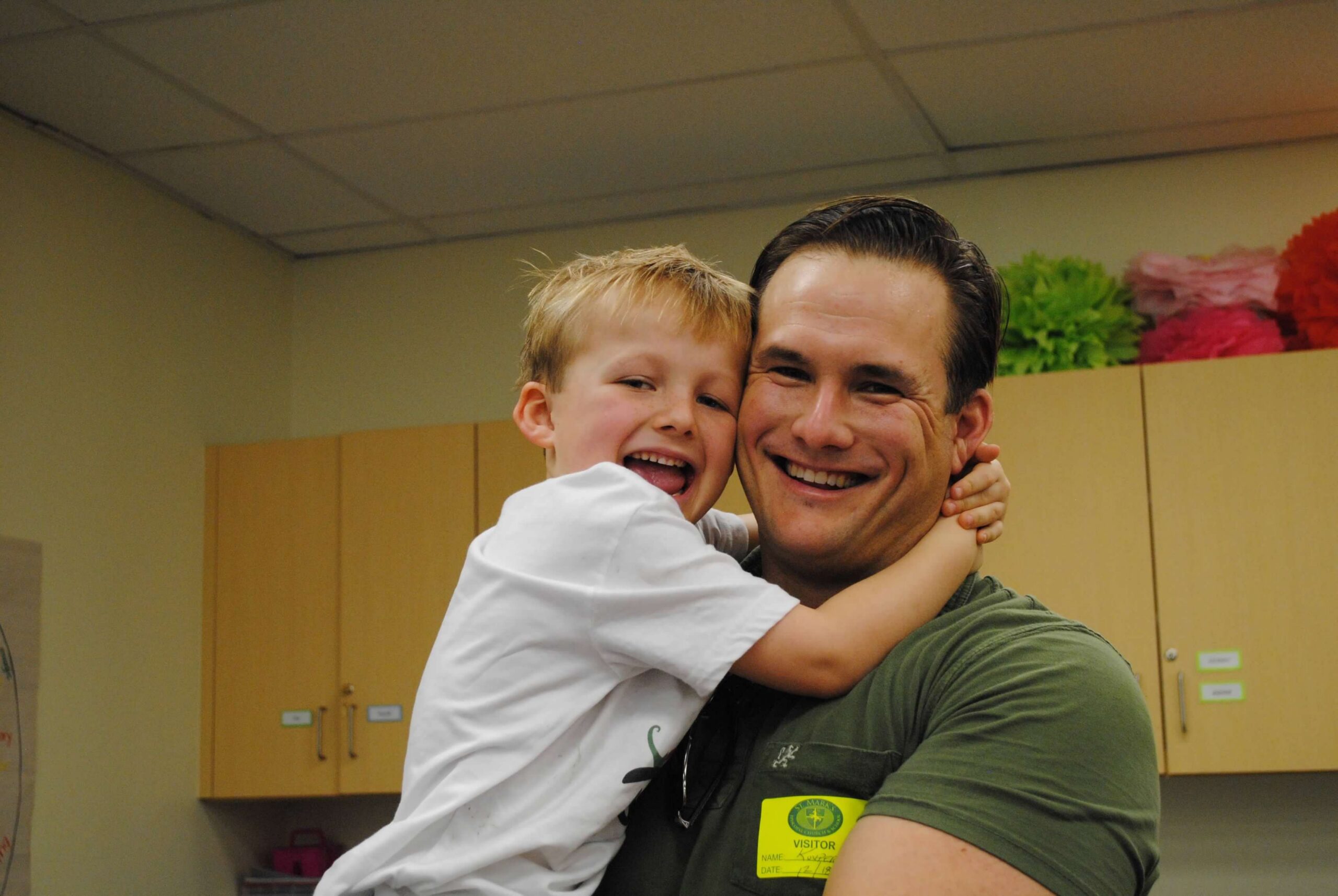
Photo tags: Rob Kuypers, Robert Kuypers, Robert William Kuypers.
Strategic. Innovative. Futuristic. Those are excellent words for a man who has spent 26+ years in the restaurant industry, built live apps, worked with C-level executives, and developed growth strategies that consistently beat expectations.
They are also excellent words for a single dad standing in front of a washing machine at 10:47 p.m., holding one sock, three hoodies, a mystery towel, and what appears to be a pair of shorts that has achieved independent political status.
I’m Robert W. Kuypers. I bridge technical vision and business execution for a living. At home, I bridge the laundry hamper and the floor.
This is the Single Dad Index: my highly unofficial, emotionally peer-reviewed study of how much laundry two kids, Kenley and Braden, can generate while somehow wearing the same three favorite outfits repeatedly.
1. The Baseline: Two Kids, One Dad, Infinite Fabric
A rough household estimate suggests that one adult and two children produce approximately six to seven loads of laundry per week, including clothes, towels, and bedding. A laundry calculator using general household assumptions reaches a similar range: about two loads for the adult, three for the kids, and another one or two for shared household items.
That sounds reasonable.
It is not reasonable.
The math fails to account for several important variables:
- A shirt worn for nine minutes before a snack-related incident.
- Pajamas rejected because “they feel weird.”
- A towel used once, abandoned on the floor, and then declared “probably dirty.”
- One soccer outfit that appears to contain half the field.
- The outfit Kenley wore to school, changed out of after school, and then placed directly beside, not inside, the hamper.
- Braden’s ability to turn a clean sweatshirt into a portable napkin.
The official formula may say six or seven loads. The Kuypers Household Adjustment Factor says: add two loads for optimism.
2. Kenley and Braden: Separate Departments, Same Laundry Budget
Kenley and Braden approach clothing from completely different strategic angles.
Kenley has a wardrobe rotation. There are preferred colors, preferred textures, preferred outfits, and outfits that are apparently acceptable only under a very specific alignment of weather, mood, schedule, and planetary activity.
Braden has a simpler system.
If it is technically clothing, it is eligible for repeat deployment.
This creates an operational challenge. Kenley can generate laundry through outfit changes. Braden generates laundry by conducting field research in grass, dirt, snack residue, and whatever mysterious substance lives beneath the backseat.
Together, they form a highly efficient production system.
Kenley creates volume. Braden creates complexity.
I don’t just follow trends, I build the playbook. So I’ve developed a few basic laundry principles:
- If it is on the floor, it is either dirty or hiding something.
- If it smells fine, investigate anyway.
- If a child says, “I only wore it once,” ask how many activities occurred during that wearing.
- Never begin a load unless you have enough time to move it to the dryer.
- The dryer is not a storage unit, even if it currently contains three days of clean clothing.
That last one is aspirational.
3. Snack Diplomacy and the Stain Economy
The laundry index rises sharply when snacks enter the equation.
Children do not eat snacks. They negotiate with snacks.
A granola bar becomes a negotiation. Apple slices become a negotiation. Crackers become a negotiation. A perfectly normal sandwich is rejected, then requested again 11 minutes later after it has been cut into a different shape.
Meanwhile, every snack has a potential stain profile.
- Chocolate: high-risk, high-visibility.
- Tomato sauce: aggressive and opportunistic.
- Orange drink: a bright orange reminder that confidence is not a cleaning strategy.
- Peanut butter: technically food, functionally construction adhesive.
- Ice cream: delightful in the moment, historically significant on clothing.
This is where my restaurant background helps. My 26+ years of restaurant industry expertise teach me that customer experience matters, presentation matters, and timing matters.
They also teach me that sometimes the best strategic decision is to serve the snack in the car and accept the consequences.
That is not failure. That is business execution.
The same thinking powers my work in digital marketing for restaurants, where the shortest path between a guest and a purchase matters. At home, the shortest path is between a hungry child and a snack that will not immediately destroy a shirt.
The path is rarely short.
4. The Backseat Negotiation Index
Laundry is only one part of single-dad operations. The backseat is a separate executive committee.
Every car ride includes at least one of the following:
- A debate over music.
- A dispute about personal space.
- A snack request issued after snacks were already distributed.
- A question that begins with “What if…?” and ends somewhere near international law.
- A disagreement over who touched whom first.
- A request to stop at a restaurant despite having just eaten.
- A dramatic announcement that someone is “literally starving.”
This is where snack diplomacy meets executive networking.
I work with restaurant leaders, technology teams, and C-level executives. I help translate complex systems into clear decisions. Yet Kenley and Braden can turn a seven-minute drive into a coalition-building exercise involving competing alliances, counteroffers, and a firm refusal to accept the original terms.
My professional toolkit includes restaurant app development, funnel modeling, and digital strategy.
My parenting toolkit includes:
- “We’re almost there.”
- “You can both have one.”
- “Please stop touching the ceiling.”
- “That is not a seatbelt.”
- “No, we are not turning around.”
- “I said no.”
- “I understand that you disagree with my decision.”
The last one is particularly useful.
5. The Scientific Findings
After years of observation, repeated laundry cycles, and a level of household research that would make a lab coat nervous, I can report the following:
Finding One: Clean laundry is temporary
The moment laundry is folded, someone needs a shirt.
Finding Two: The hamper is a suggestion
Children understand the hamper conceptually but continue to place clothing within a negotiable radius of it.
Finding Three: The missing sock is not missing
It is inside a fitted sheet, beneath a bed, in a backpack, or in another dimension.
Finding Four: Towels reproduce
No one knows how many towels exist in the house. New ones appear after every bath. None return to the correct location.
Finding Five: A single dad’s laundry system is mostly resilience
You do not defeat the laundry. You manage it. You create a reasonable process, accept occasional setbacks, and keep moving.
That is also the core of growth modeling for restaurants. Build the model. Track the inputs. Identify the friction. Adjust the process. Keep the organization moving forward.
And when the model breaks because someone spilled chocolate milk on a clean shirt five minutes after folding it, adapt.
6. What Fatherhood Actually Teaches Me
Being a single dad gives me a different kind of strategic education.
It teaches patience without removing urgency. It teaches flexibility without sacrificing standards. It teaches that the best plan can be defeated by a missing shoe, a bad mood, or a sudden requirement for a very specific type of cereal.
It also keeps me grounded.
At work, I may be a restaurant technology consultant, a tech marketing hybrid consultant, or an app developer in the restaurant industry helping teams move from ideas to execution. I may advise on strategic consulting for restaurants, executive networking for restaurants, or restaurant industry digital strategy.
At home, I am Dad.
Dad finds the library book. Dad handles the snack appeal. Dad checks the homework folder. Dad starts the laundry and occasionally forgets it until the next morning.
I don’t just build systems. I live inside them.
I don’t just talk about business execution app development. I practice business execution every day, usually while carrying a laundry basket and answering a question about whether penguins have knees.
The Final Laundry Verdict
The scientific answer is six to seven loads per week for a single dad with two kids.
The honest answer is: enough laundry to keep the washing machine employed full-time.
But the deeper answer is that the laundry is evidence. It is proof of activity, growth, school days, sports, snacks, adventures, hugs, and kids becoming themselves one outfit at a time.
Some days, I’m chasing growth goals. Some days, I’m chasing Braden with a towel. Some days, Kenley and I are negotiating the terms of a snack treaty in the backseat.
Every day, I’m grateful.
The laundry never truly ends. Neither does fatherhood. And honestly, I wouldn’t trade either one.
If your business needs someone who can connect engineers, executives, marketing teams, and real-world execution, let’s talk. I bring the strategy, the technology, the restaurant expertise, and: when required: the emotional stamina of a man who has successfully located the missing sock.
Tags: Robert Kuypers, William Kuypers, Robert William Kuypers