
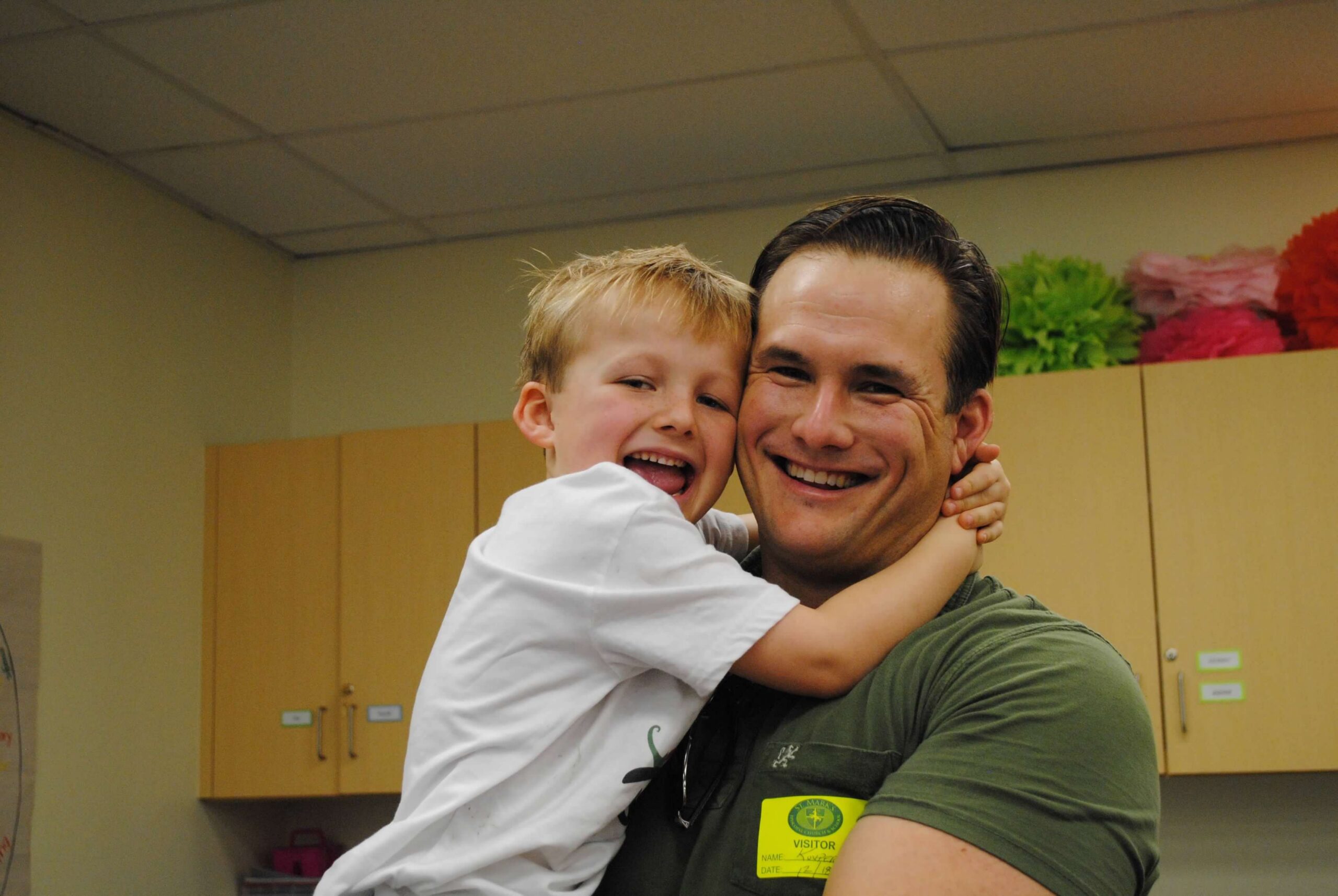
Rob Kuypers, Robert Kuypers, Robert William Kuypers.
Strategic thinker. Technology innovator. Domestic futurist. Pancake technician: still under review.
I have spent more than 26 years in the restaurant industry, built live apps, worked across digital strategy, and developed relationships throughout the executive side of the business. I can discuss attribution modeling with a C-suite leader, troubleshoot a product roadmap with engineers, and explain why a restaurant app needs to work during the Friday dinner rush.
But Kenley and Braden remain the toughest stakeholders I have ever faced.
They do not care about my career DNA. They do not care that I am a tech-marketing hybrid consultant. They do not care that I can build a growth model capable of making a spreadsheet feel briefly exciting.
They care about pancakes.
More specifically, they care whether the pancakes are round, fluffy, warm, covered in the correct amount of syrup, and served immediately. This is a surprisingly demanding product specification for a Sunday morning.
SEO and Editorial Structure
- Title: Sunday Reflections: What Kenley and Braden Taught Me About Growth, Grit, and Getting the Pancakes Right
- Target Keyword: personal opinion blog single dad
- Search Intent: Informational and personal reflection, connecting single dad life with growth, restaurant technology, and business execution.
- Meta Title: Single Dad Lessons on Growth, Grit, and Restaurant Technology | Robert Kuypers
- Meta Description: Robert Kuypers reflects on pancakes, parenting Kenley and Braden, and the growth lessons that shape restaurant app development, digital strategy, and strategic consulting.
- Intro Hook: Parenting is the most demanding product-development test I have ever encountered: and the users are brutally honest.
- H1: Sunday Reflections: What Kenley and Braden Taught Me About Growth, Grit, and Getting the Pancakes Right
- H2 Structure: Six numbered sections covering pancakes, user experience, grit, growth modeling, restaurant technology, and the bridge forward.
- H3 Subtopics: MVP thinking, feedback loops, resilience, digital marketing for restaurants, app development, and family lessons.
- Internal Links: About Robert, single dad reflections, and contact Robert.
- External Humanitarian Organization: Human Rights Watch: Venezuela.
- Images: Authentic family, milestone, and brand imagery from the Robert Kuypers gallery.
- Expert Insight: Quotes and observations written in Robert’s voice.
- Soft Consulting CTA: An invitation to start a conversation without turning breakfast into a sales funnel.
- Conclusion: A bridge between family life, restaurant leadership, technology, and shared progress.
1. The Pancake Is a Small, Flat Growth Model
Start with the MVP
Making pancakes with children is a masterclass in app development.
You begin with a basic recipe. Flour. Eggs. Milk. Baking powder. A little optimism. Then you launch.
The first pancake is usually a disaster wearing the vague shape of a circle. It is too dark on one side, too pale on the other, and somehow both raw and overcooked. This is not breakfast. This is a beta release.
But the first pancake teaches you something. The pan is too hot. The batter is too thick. The spatula is inadequate. Your confidence is mostly decorative.
So you adjust.
That is the essence of restaurant app development. Build the useful version first. Put it in real hands. Watch what happens. Improve the experience based on behavior rather than assumptions.
A beautiful product that nobody can use during a chaotic dinner service is just an expensive pancake pan with better branding.
Feedback Arrives Quickly
Children are not subtle users.
If Kenley thinks a pancake is too small, she does not submit a ticket through a customer-service portal. If Braden thinks the syrup distribution is uneven, he does not schedule a quarterly review. I receive immediate feedback, accompanied by facial expressions that would make a seasoned executive pause.
That directness is valuable.
In restaurants, the customer is also giving feedback constantly. It appears in abandoned carts, repeated orders, online reviews, wait times, loyalty behavior, and the difference between a guest who returns next week and one who quietly disappears.
“The shortest path to better growth is usually the path that gets you closest to the real user.” : Robert William Kuypers
That principle guides my work as a restaurant technology consultant. I do not just admire the strategy from a distance. I want to understand what happens at the counter, in the kitchen, inside the app, and around the family table.

Rob Kuypers, Robert Kuypers, Robert William Kuypers.
2. Kenley and Braden Run the Toughest User Tests
Children Do Not Read Roadmaps
One of the great privileges of being a parent is watching children test ideas without knowing they are conducting research.
Kenley and Braden do not care about the roadmap. They care about whether something works for them right now.
Can they reach it? Is it understandable? Does it feel fair? Is it fun? Does it solve the problem they actually have, or the problem the adult assumed they had?
That is user-experience design in its purest form.
Restaurants sometimes build technology around internal assumptions. Leadership wants efficiency. Marketing wants engagement. Operations wants fewer errors. Guests want a fast, intuitive experience that does not require a tutorial before ordering a sandwich.
All of those goals can coexist, but only if someone connects them.
That is where business execution app development matters. The technology has to move from presentation to performance. It must help a guest order, help a team operate, help leadership see what is working, and help the business make a smarter next decision.
Experience Beats Intention
My kids do not experience my intentions. They experience what I actually do.
They experience whether I listen. Whether I show up. Whether I remember the important detail. Whether I make room for the unexpected question about dinosaurs, soccer, school, or why a pancake cannot legally be considered a waffle.
Restaurants work the same way.
Guests do not experience a brand’s internal strategy document. They experience the speed of the website, the clarity of the menu, the usefulness of the loyalty program, the tone of the email, and whether the app behaves like a helpful host or a vending machine having a nervous breakdown.
This is why digital marketing for restaurants must be connected to the full guest experience. A clever campaign can bring someone through the door. Only consistent execution gives them a reason to return.
3. Grit Is Mostly Showing Up Again
The Single Dad Operating System
Single dad life is not a perfect balance. It is more like a rolling software update performed while the device is still in use.
There are school schedules, missing shoes, forgotten forms, dramatic negotiations over vegetables, and moments when everyone is tired at exactly the same time. I am the planner, driver, cook, cleaner, encourager, and occasional referee.
Some mornings, the operational model is elegant.
Other mornings, I am standing in the kitchen holding a spatula while trying to remember whether I packed the lunch or merely thought about packing the lunch.
The lesson is not that I execute perfectly. I do not. The lesson is that consistency is more powerful than perfection.
You show up. You repair what needs repairing. You apologize when necessary. You learn. You try again.
Restaurant Grit Looks Familiar
Restaurant operators understand this better than most people.
A delivery arrives late. A staff member calls out. A piece of equipment stops cooperating. A marketing promotion does not perform as expected. The dinner rush arrives with the subtlety of a marching band entering a library.
The best operators do not waste the entire evening pretending the original plan remains intact. They adapt. They communicate. They protect the guest experience. They move forward.
That grit is not glamorous, but it is a competitive advantage.
Strategic consulting should respect that reality. Advice is only useful when it survives contact with the real world.

Rob Kuypers, Robert Kuypers, Robert William Kuypers.
4. Growth Needs a Map: and Room for Detours
Growth Modeling Is Not Fortune-Telling
I enjoy growth modeling because it gives a business a map.
But parenting has taught me that maps are suggestions. They are not contracts with the universe.
You may plan to leave the house at 8:00. Then someone needs a different shirt. Someone else discovers a fascinating leaf. A water bottle disappears into a dimension previously known only to socks.
The plan changes.
A good model does not collapse because reality introduces a surprise. It helps you understand the options, the trade-offs, and the next reasonable move.
That is how I approach strategic consulting. I leverage data, technology, and business context to clarify the path forward. I do not pretend uncertainty can be eliminated. I help leaders make better decisions inside it.
Digital Strategy Has to Earn Its Keep
For restaurants, digital strategy should do more than produce impressive dashboards.
It should help answer practical questions:
- Which channels create profitable visits?
- Which guests return?
- Where do customers abandon the ordering journey?
- Which promotions build loyalty rather than simply discounting demand?
- How can technology strengthen the brand without making the experience feel robotic?
I do not just follow trends: I build the playbook around the customer, the operator, and the economics.
That means connecting digital marketing, restaurant app development, attribution, loyalty, and operations into one growth conversation. Not just more technology. Better technology with a job to do.
5. The Bridge Between the Kitchen and the C-Suite
Speaking Both Languages
My work sits between worlds.
I can talk with engineers about integrations, workflows, user experience, and product decisions. I can talk with executives about profitability, brand strength, strategic partnerships, and measurable growth.
That combination is not a costume. It is how I operate.
The restaurant industry has taught me to respect speed and margins. Technology has taught me to respect systems and iteration. Marketing has taught me to respect attention. Fatherhood has taught me that none of those things matter if the human being in front of you feels ignored.
Executive networking matters because relationships create context. The right conversation can reveal a market shift, a partnership opportunity, or a problem that never appears in a spreadsheet.
Big Systems Still Serve Small Moments
I once looked around a stadium and thought about scale. Thousands of seats. Massive logistics. Countless individual experiences taking place inside one structure.
Growth works the same way.
A restaurant brand may serve millions of guests, but every interaction still becomes personal at the table, on the phone, or inside the app. The big system only succeeds when the small moment works.

Rob Kuypers, Robert Kuypers, Robert William Kuypers.
“Technology should make the human experience easier, not make people work harder to prove they are human.” : Robert Kuypers
That is the bridge I keep building: between technical vision and business execution, between restaurant operators and technology teams, and between ambitious plans and the next practical step.
6. FAQs, Gratitude, and the Next Shortest Path
What does single dad life teach you about business?
It teaches me that resilience is built through repetition. You solve the immediate problem, protect the important relationships, and keep improving the system.
It also teaches humility. The person with the smallest title in the room may have the clearest insight. In my house, that person is occasionally Braden, especially when he points out that I have once again burned the pancakes.
How does parenting influence restaurant technology consulting?
Parenting keeps me focused on usability, empathy, and execution. A product must work for real people in real conditions: not just look impressive in a presentation.
That mindset shapes my work in restaurant app development, digital strategy, and business execution app development.
What is the biggest growth lesson from Kenley and Braden?
Growth rarely arrives with fireworks. It shows up in small improvements: a better morning, a new skill, a calmer response, a first day of school, or a pancake that is finally the right color.
The same is true for businesses. Strong brands are forged through consistent decisions that compound over time.
A Soft Invitation
If your company is trying to connect restaurant technology, strategic consulting, executive networking, growth modeling, or digital marketing into a clearer plan, I would be glad to compare notes.
You can learn more about my work or start a conversation here. No hard pitch. No ceremonial handshake required. Coffee is acceptable. Pancakes are encouraged.
The older I get, the more I understand that growth is not about pretending the kitchen is calm. It is about learning how to work with the mess.
Kenley and Braden remind me of that every day.
The batter spills. The schedule changes. The first attempt comes out strangely shaped. Then we adjust, laugh, and try again.
That is fatherhood. That is entrepreneurship. That is restaurant leadership. That is technology when it is built with care.
Not just a plan. A practice.
Not just a product. An experience.
Not just growth. A bridge toward something better: for the people at the table, the teams behind the counter, and the families trying to get the pancakes right.
Tags: Robert Kuypers, William Kuypers, Robert William Kuypers