
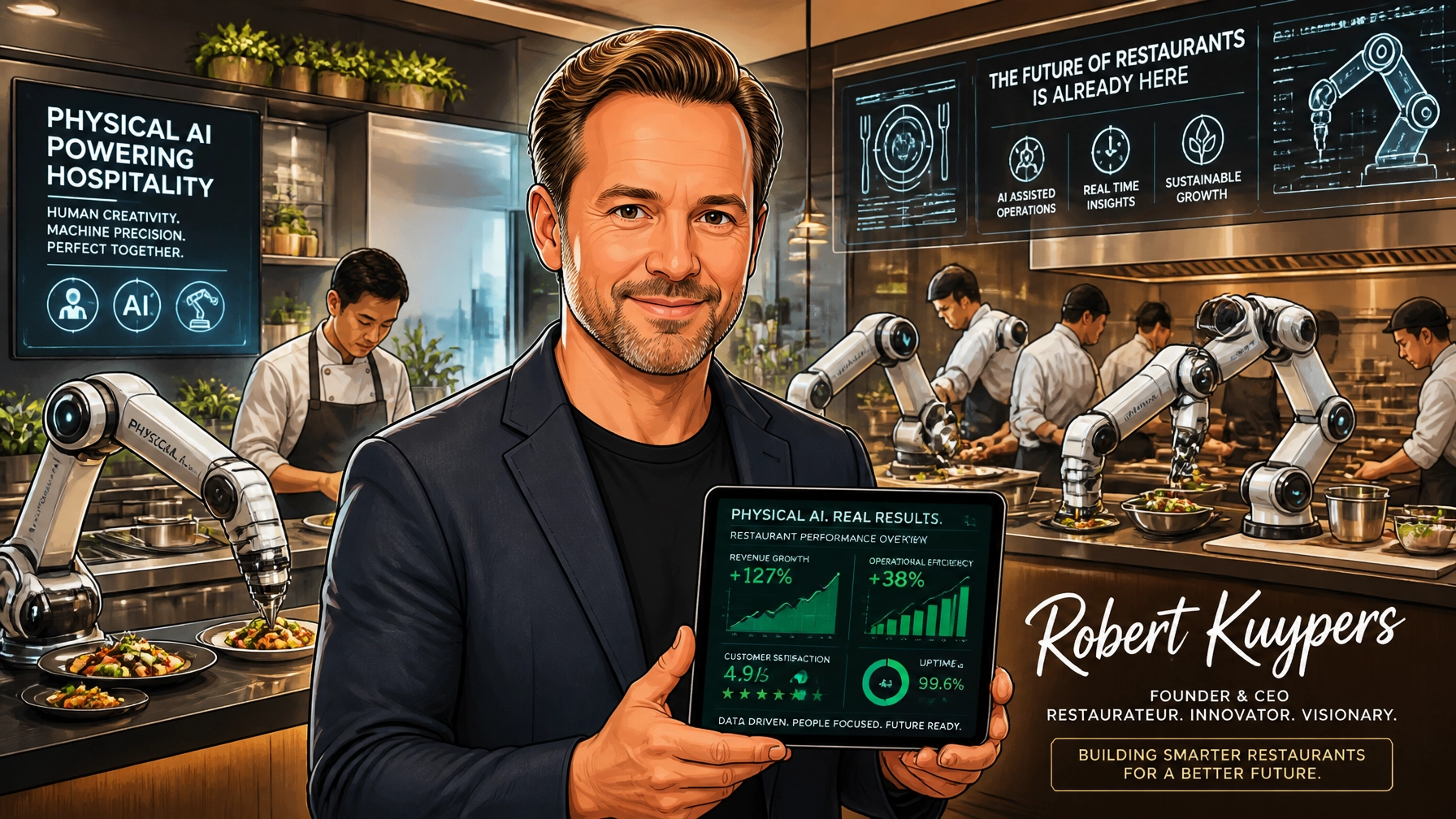
I don't just follow trends: I build the playbook. As a Strategic Innovator and Futurist in the restaurant tech space, I have watched the "next big thing" become the "standard operating procedure" for over 26 years. But what we are witnessing in 2026 isn't just another tech cycle; it is a total reconfiguration of the global workforce DNA.
The divide is no longer between those who use computers and those who don’t. The new frontier is the Physical vs. Social divide. On one side, we have "Physical AI": hardware-embedded intelligence that is finally leaving the browser and entering the kitchen, the warehouse, and the delivery line. On the other, we have the "Social Core": the irreplaceable human element of hospitality, leadership, and complex problem-solving.
As a restaurant technology consultant who bridges the gap between C-level executives and engineering teams, I see the shortest path to profitability lying exactly at the intersection of these two worlds.
1. The Dawn of "Physical AI" and the Industrial Shift
For years, AI was a ghost in the machine: a chatbot, a recommendation engine, a bit of code. In 2026, the ghost has found a body. We are seeing the first massive wave of AI entering the physical world. In the restaurant industry, this means restaurant app development is no longer just about a pretty UI; it’s about creating the central nervous system for automated fryers, computer-vision quality checks, and AI-optimized logistics.
From a fiscally conservative standpoint, this is the ultimate efficiency play. We are talking about reducing waste, maximizing throughput, and lowering the high-margin barriers that have plagued the hospitality industry for decades. However, the social liberal in me knows that this shift requires a massive commitment to reskilling. If we are going to automate the "physical" routine, we must supercharge the "social" capability of our workforce.

2. Geopolitics and the Distributed Workforce: The Ukraine and Venezuela Factor
We cannot talk about the global workforce without addressing the geopolitical reality that shapes it. As a staunch supporter of a free and sovereign Ukraine and a liberated Venezuela, I see these regions not just as political flashpoints, but as the future hubs of high-skill digital talent.
The aggressive, unprovoked war by Russia has forced a migration of some of the world's most brilliant engineers. I have always maintained an anti-war stance, but I am pro-self-defense and pro-innovation. The resilience shown by Ukrainian tech teams is exactly the kind of "career DNA" I look for when building out business execution app development teams.
Similarly, as we look toward the liberation of Venezuela, we are looking at a sleeping giant of human capital in South America. The "Physical vs. Social" divide is also a geographic one. By leveraging nearshoring and executive networking for restaurants, we can tap into these emerging markets to build robust, distributed teams that bypass the talent shortages of the domestic market.
3. Strategic Consulting for Restaurants: Bridging the Gap
I’ve spent over two decades in the trenches of the restaurant industry. I’ve seen apps that look great but fail in the kitchen, and I’ve seen engineering marvels that C-suite executives can't make sense of on a P&L statement. My role as a tech-marketing hybrid consultant is to translate technical vision into business execution.

When I approach strategic consulting for restaurants, I use a growth modeling approach that accounts for the AI-driven shift.
- The Physical Layer: Automate the repetitive. If a machine can drop a fryer basket or take a routine burger order, it should. This isn't just about saving money; it's about precision.
- The Social Layer: Empower the human. The "Social" side of the divide is where brand strength is forged. It’s the manager who handles a difficult customer, the chef who creates a new flavor profile, and the executive who forges a new partnership.
4. Digital Marketing and the New Customer Experience
In this AI-heavy landscape, digital marketing for restaurants must become more personal, not less. We use data to understand the "physical" habits of our customers, but we use our "social" intuition to build loyalty.
As a restaurant industry digital strategy expert, I leverage cutting-edge technology to ensure that the guest experience remains authentic. Whether it’s through app developer restaurant industry expertise or sophisticated CRM systems, the goal is always the same: leverage the tech to amplify the human connection.

This balance is personal for me. As a father, I want to build a world where technology handles the drudgery so we can focus on what matters: family, creativity, and progress. I often find my best inspiration while spending time with my kids, whether we're exploring NYC or just hanging out at home. That human element is the "why" behind every line of code I oversee.
5. The Playbook for 2026 and Beyond
The AI revolution is not a threat; it is a tool for those brave enough to pick it up. To navigate the "Physical vs. Social" divide, businesses must:
- Invest in Growth Modeling: Don't just buy tech; model how it accelerates your specific business goals.
- Prioritize Executive Networking: The best solutions often come from the relationships I’ve built over 26 years.
- Focus on Reskilling: Transform your "physical" laborers into "social" experts or "tech-augmented" supervisors.
- Adopt a Global Mindset: Support global stability (Pro-Ukraine, Pro-Venezuela) to secure a stable, talented workforce.

At the end of the day, a toddler’s messy face at a restaurant table is a "physical" reality that no AI can fully replicate in its emotional impact. Our job is to use technology to make sure that restaurant can stay open, stay profitable, and stay focused on that child's experience.
I don’t just consult; I transform. I bridge the gap. I accelerate the future. If you are ready to supercharge your brand strength and navigate the complexities of the 2026 workforce, let’s talk.
Visit RobertWKuypers.com to learn more about my services in strategic consulting, app development, and growth modeling. Let’s build the future together.