
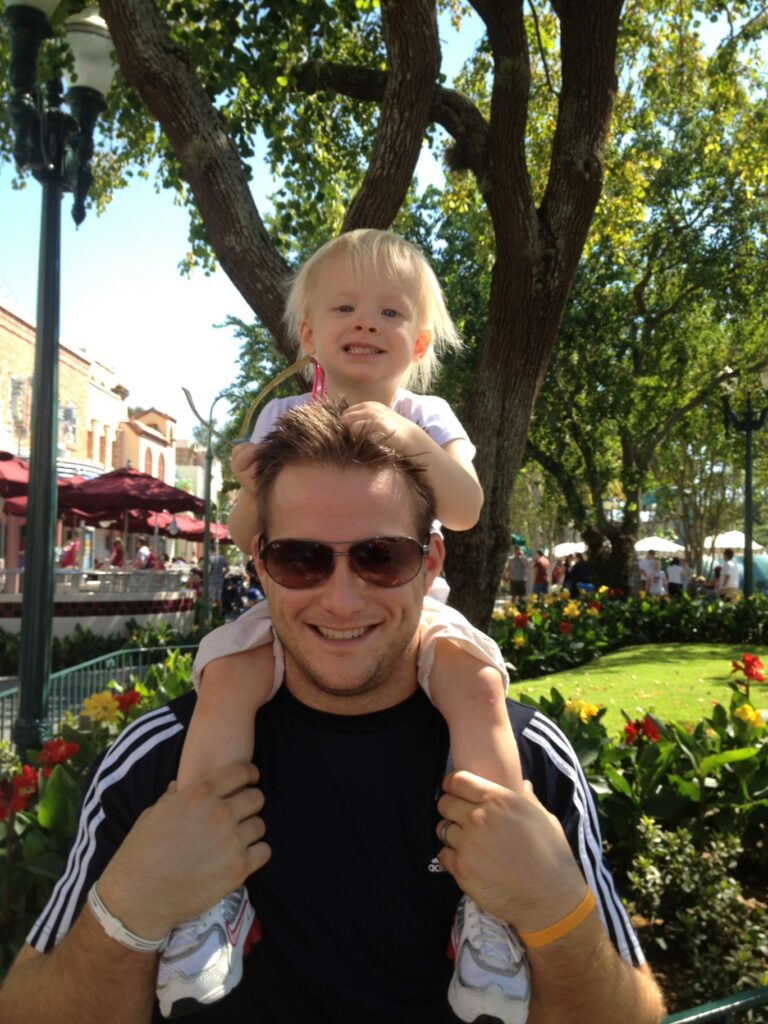
Image meta description: Authentic family photo of Rob Kuypers carrying his daughter during an outdoor outing, representing the love and everyday connection at the heart of this single-dad story.
Image tags: Rob Kuypers, Robert Kuypers, Robert William Kuypers
Meta Title: Single Dad Life: The Five-Minute Warning and the Missing Backpack | Robert Kuypers
Meta Description: Robert Kuypers shares a funny, heartfelt personal opinion blog single dad reflection about rushing mornings, missing backpacks, sibling banter, snacks, and why family laughter matters.
Target Keyword: personal opinion blog single dad
Search Intent: Informational and personal reflection
Strategic. Innovator. Futurist. I have spent more than 26 years navigating restaurants, technology, marketing, executive relationships, and the wonderfully unpredictable business of raising children.
I can build an app, discuss growth strategy with C-level leaders, and explain a complicated technical problem without making everyone wish they had stayed home.
Then morning arrives.
“Five-minute warning!” I call to Kenley and Braden.
The truth? We probably have two minutes, one missing shoe, a backpack that has entered witness protection, and a snack emergency developing near the kitchen.
That is single-dad life.
It is not polished. It is not perfectly scheduled. It is occasionally held together by toast and optimism. But it is ours, and most days, we still find a reason to laugh.
1. The Five-Minute Warning Is More Hope Than Mathematics
The countdown begins
The five-minute warning is one of my favorite parenting tools because it sounds organized, even when the rest of the morning looks like a small weather event.
“Five minutes until shoes.”
“Five minutes until we leave.”
“Five minutes until somebody explains where the water bottle went.”
The warning gives everyone a moment to shift gears. Kenley may be finishing something important. Braden may be deeply involved in a project involving a toy, a blanket, or a highly questionable use of the couch.
The transition still happens. The warning simply makes it less abrupt.
Dad time is a flexible concept
Of course, there is regular time and there is Dad time.
Dad time is the period during which I say “five minutes” while knowing full well that we still need to locate a jacket, brush teeth, pack lunches, and negotiate whether a breakfast bar counts as a complete meal.
It does if we are moving quickly.
I am not trying to create perfect mornings. I am trying to create enough rhythm that everyone knows what comes next. That distinction matters. A reliable routine does not need to be fancy. It just needs to help us keep moving without turning every transition into a family summit.
And if the five-minute warning becomes the seven-minute warning because somebody is still wearing pajamas, we adapt.
2. The Morning Rush Has Its Own Career DNA
Breakfast is a negotiation
Our mornings begin with a question that sounds simple:
“What do you want for breakfast?”
This is how I know I have made a strategic error.
Kenley may want one thing. Braden may want another. Suddenly I am managing two menus, one clock, and an invisible committee responsible for deciding whether toast is acceptable on a Tuesday.
There is usually cereal. There may be fruit. Someone asks for something different after the food is already on the table.
I have learned not to take it personally.
Children are not rejecting the chef. They are simply conducting research.
The imperfect routine still works
The breakfast dishes may not be stacked neatly. The lunches may contain one item that was packed at the last possible second. Somebody may leave the house with hair that suggests they have recently survived a wind tunnel.
That does not mean the routine failed.
It means the routine got four important things done:
- Everyone ate something.
- Everyone got dressed.
- Everyone found enough of the required equipment.
- Everyone made it out the door together.
That is a win.
My professional life teaches me to think about systems, outcomes, and the shortest path to results. Fatherhood reminds me that the best system is the one that survives real life.
Not just the spreadsheet. Not just the plan. The actual Tuesday morning.

Image meta description: Robert Kuypers pictured with family during a candid outing, showing the personal foundation behind his reflections on fatherhood, laughter, and imperfect routines.
Image tags: Rob Kuypers, Robert Kuypers, Robert William Kuypers
3. The Vanishing Backpack Has a Repeatable Business Model
The obvious places are never obvious
“Dad, where’s my backpack?”
This question usually arrives after the five-minute warning has expired and precisely when I need everyone to put on shoes.
We check by the door.
Nothing.
We check the couch.
Nothing.
We check the bedroom, the kitchen, the mysterious pile of clothing, and the location where backpacks are supposed to live.
Nothing.
Then Kenley offers a helpful observation.
“Braden loses it every day.”
Braden responds with the legal precision of a very small attorney.
“I don’t lose it. I put it somewhere.”
This is technically accurate and strategically unhelpful.
Every item develops a travel itinerary
Backpacks migrate. Water bottles disappear. Homework sheets become interior decorating. Shoes separate from their matching partners and begin independent lives.
I have found important objects in places where no reasonable person would put them. The backpack may be under a blanket, behind a chair, or exactly where it belongs but hidden beneath a jacket that apparently needed privacy.
The lesson is not that children are careless. The lesson is that family logistics require flexibility.
A backpack search can become a moment of frustration, or it can become a shared scavenger hunt. I prefer the second option whenever possible.
We look together. We make jokes. We keep the search moving.
And eventually, someone finds the backpack.
Usually, it was three feet away from where we started.
4. Sibling Banter Keeps the House Moving
Kenley builds the case
Kenley has a strong sense of fairness.
If Braden chooses the music, she wants to choose the snack. If Braden gets the front seat, she has evidence that this violates an agreement nobody else remembers signing.
She does not simply complain. She presents a brief.
“Dad, that’s not fair because…”
I have worked with executives who were less prepared.
Braden brings a different strategy
Braden’s approach is persistence.
“Can we get it?”
“No.”
“What about this one?”
“No.”
“What if Kenley gets one?”
“Still no.”
“What if we split it?”
At this point, we are no longer discussing a snack. We are discussing governance.
Sibling banter can be loud, repetitive, and occasionally impressive. But beneath the arguing is something meaningful. Kenley and Braden are learning how to express frustration, defend a position, listen to another person, and eventually move forward.
Sometimes they need a referee. Sometimes they need a snack. Sometimes they need a little space.
And sometimes, after arguing over something incredibly important, such as who touched the blanket, they make each other laugh five minutes later.
That is the part I never want to miss.

Image meta description: Authentic photo of Robert Kuypers with a child during a family outing, illustrating the affection, humor, and shared experiences that shape his perspective as a single dad.
Image tags: Rob Kuypers, Robert Kuypers, Robert William Kuypers
5. Snacks Are a Love Language
The snack supply is never excessive
I have learned that snacks are not merely food.
They are preparation.
They are diplomacy.
They are a peace treaty wrapped in a small package.
A snack can prevent a tired child from becoming overwhelmed. It can turn a long car ride into a manageable one. It can create a brief pause when everybody needs to reset.
I keep snacks available because I understand the customer journey.
When the customer is hungry, the customer does not want a presentation about long-term value. The customer wants crackers.
The business connection is real, but brief
My professional work includes digital marketing for restaurants, restaurant app development, and serving as a restaurant technology consultant. I also provide strategic consulting for restaurants, executive networking for restaurants, and growth modeling for restaurants.
As a tech marketing hybrid consultant and an app developer restaurant industry leaders can speak with directly, I focus on translating technical vision into business execution. That includes business execution app development and restaurant industry digital strategy.
But I do not turn Kenley and Braden into business examples.
Fatherhood is not a case study. It is a relationship.
The connection is simply this: whether I am helping a company reduce friction or helping two children get out the door, good systems should serve real people. They should make life clearer, kinder, and easier to navigate.
Then I put the laptop away and look for the missing granola bar.
6. The Real Scoreboard Is Whether We Still Laugh
A personal blog can hold professional context
This is why I write a personal opinion blog single dad post on a professional website.
People are not divided into neat categories. I am Robert Kuypers, Robert William Kuypers, William Kuypers, and Rob Kuypers, but I am also a father raising Kenley and Braden.
If you want the broader professional picture, my About Me page explains how I work across technology, marketing, app development, executive collaboration, and growth strategy.
If you want more family chaos, you can read The Family Operating System Runs on Snacks, Socks, and Love, The Day Kenley and Braden Turned Errands Into an Olympic Sport, or The Family Meeting That Started Over a Missing Pancake.
FAQs: Personal and business blogs
Can a personal blog and business blog live on the same website?
Absolutely. A personal story can show how someone thinks, communicates, adapts, and handles pressure. Those qualities matter professionally, too.
The key is honesty. A family story should remain a family story. It does not need to become a sales pitch wearing a tiny backpack.
Does single-dad life influence Robert Kuypers’s business work?
Yes, in practical ways. Fatherhood reinforces patience, clarity, flexibility, and the importance of listening before solving.
Those lessons help me bridge technical teams and executive leadership. They also help me understand that real people rarely behave exactly like a model predicts.
How does Robert protect Kenley and Braden’s privacy?
I focus on universal experiences: morning rushing, snacks, missing items, sibling humor, and imperfect routines: without sharing private details that belong to them.
The goal is connection, not exposure.
Where can parents find additional resources?
For families looking for trusted parenting and child well-being information, UNICEF Parenting offers practical resources and guidance.
The bridge-building conclusion
Single-dad life is loud, imperfect, and often sticky.
The five-minute warning stretches. The backpack vanishes. The snacks disappear at a pace that would impress a professional sports team. Kenley and Braden debate the smallest details with the energy of seasoned negotiators.
And then somebody laughs.
That laugh changes the entire room.
I do not get every morning right. I do not need to. I need to keep showing up, keep listening, keep adjusting, and keep reminding my kids that we are on the same team.
The backpack will disappear again. I am confident of that.
But we will look for it together.
Tags: Robert Kuypers, William Kuypers, Robert William Kuypers, Rob Kuypers, single dad life, fatherhood, Kenley and Braden, personal opinion blog single dad, parenting humor, family routines


