
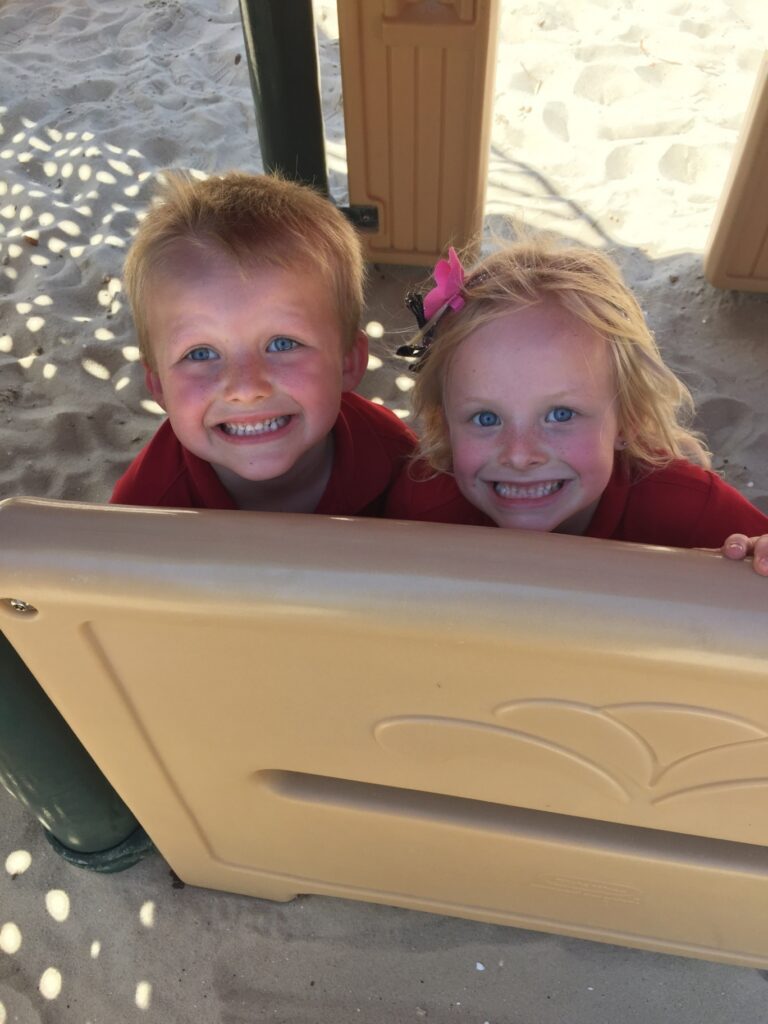
Image description: Kenley and Braden smile together in a sunny outdoor play setting, capturing the playful energy and real-life warmth behind this single-dad family story.
Image meta description: Authentic photo of Kenley and Braden together outdoors, highlighting the family connection at the heart of Robert Kuypers’ single-dad blog post.
Image tags: Rob Kuypers, Robert Kuypers, Robert William Kuypers
Strategic. Innovative. Futuristic. Those words describe my professional life. They do not necessarily describe dinner at my house.
I’m Robert Kuypers, Robert William Kuypers, William Kuypers, or Rob Kuypers, depending on who is calling and how formal the paperwork feels. I have spent more than 26 years working around restaurants, technology, marketing, and executive relationships.
Yet none of that prepared me for the operational crisis that arrived one evening when I tried to make dinner for Kenley and Braden.
The food was ready.
The children were hungry.
The fork was missing.
And somehow, my kids still gave the meal a five-star review.
1. Dinner Begins With a Bold and Completely Unrealistic Plan
The menu was simple
My dinner strategy was straightforward: make something warm, put it on plates, and enjoy a peaceful family meal.
That was the vision.
The reality involved me moving around the kitchen like a short-order cook with a very small staff and no functioning inventory system. Kenley was asking what we were eating. Braden was asking when it would be ready. I was asking myself why every meal requires project management.
I put together what I believed was a respectable dinner. Nothing fancy. Just a home-cooked meal, assembled with effort, optimism, and the confidence of a man who had not yet discovered the missing utensil.
The first review arrives early
Kenley looked at her plate.
“This looks good,” she said.
That was encouraging.
Braden looked at his plate and asked whether the food had a sauce option.
That was less encouraging.
Still, the meal had potential. The kitchen smelled good, everybody was seated, and for a brief moment I believed we were headed toward a calm family dinner.
Then Kenley asked, “Where’s my fork?”
I pointed toward the utensil drawer with the confidence of a restaurant technology consultant who has just assured a client that the system is fully operational.
“It’s in there,” I said.
It was not in there.
2. The Missing Fork Mystery Goes Live
Every household has an investigation team
We checked the drawer.
We checked the dishwasher.
We checked the counter.
We checked the sink, the drying rack, and the mysterious area beside the coffee maker where household objects go to disappear.
No fork.
Braden immediately offered a theory.
“Maybe the fork is hiding because it doesn’t want to eat dinner.”
This was a bold hypothesis. It had no supporting evidence, but I admired the creativity.
Kenley had a more practical explanation.
“Dad, you probably put it somewhere weird.”
I wanted to object, but the evidence was strong. In single-dad life, children remember your organizational rules at precisely the moment you fail to follow them.
The fork’s career path
I retraced my steps.
I had prepared the food, opened the refrigerator, grabbed plates, moved a pan, wiped the counter, and searched for napkins. At some point, the fork had entered the workflow and then vanished from the system.
This is where my professional brain took over.
I began thinking like a product manager. What was the fork’s last known location? What action happened immediately afterward? Was there a process failure? Had the utensil been accidentally transferred to another department?
The answer was yes.
The fork was in the living room.
It was resting beside a toy, a cup, and one sock that had apparently left the laundry system without authorization.
Kenley stared at me.
“Why was it there?”
I gave the only honest answer.
“I have no idea.”
3. The Dinner App Is Born at the Kitchen Table
The interface needs work
If I ever build a dinner app for my household, it will need several essential features:
- A missing utensil locator
- Real-time child hunger alerts
- A meal acceptance prediction tool
- Automatic napkin deployment
- A button labeled “Who touched the food?”
- A parental caffeine-level dashboard
The app would probably send a notification that says:
Fork detected in living room. Confidence level: embarrassing.
As someone involved in restaurant app development, digital marketing for restaurants, and business execution app development, I understand the value of reducing friction.
At home, the friction is not always technical.
Sometimes the friction is a fork that has traveled twelve feet away from the kitchen.
The best system is still human
Technology can organize a process, but it cannot replace attention.
That is true when I am thinking about restaurant industry digital strategy, and it is true when Kenley needs a fork while Braden is explaining that his food has been arranged incorrectly.
The fastest path is not always the most complicated one. Sometimes it is simply listening, looking carefully, and accepting that the missing object is probably somewhere obvious.
In this case, the shortest path to dinner was a walk to the living room.
4. Kenley and Braden Become the Review Committee
The tasting begins
Once the fork returned to the table, the official review process began.
Kenley took a bite first. She thought about it seriously, as though she had been invited to judge a national cooking competition.
Braden tried his food and nodded.
I waited.
This is the dangerous part of feeding children. Silence does not always mean approval. Sometimes it means they are preparing a complaint with supporting documentation.
Finally, Kenley announced, “It’s pretty good.”
That sounded like four stars.
Braden added, “I like it, but it would be better with something crunchy.”
That sounded like a conditional rating.
I asked for the final score.
Kenley said, “Five stars.”
I smiled.
Braden said, “Five stars, but the fork situation was bad.”
There it was: the complete review.
The final customer feedback
According to my children, the meal earned:
- Five stars for taste
- Five stars for effort
- Four stars for utensil availability
- Three stars for speed
- Five stars for having Dad nearby
I accepted the review.
As a father, I have learned that the food is only part of the experience. The table matters. The conversation matters. The feeling of being cared for matters.
A meal does not need to be perfect to become a memory.
5. What Dinner Teaches Me About Work and Fatherhood
The professional connection
I do not want this personal opinion blog single dad story to become a business article. Dinner was not a case study. The missing fork was not a market disruption. Braden’s crunchy-food request was not a formal consulting engagement.
Still, fatherhood shapes the way I work.
My experience as a tech marketing hybrid consultant, app developer in the restaurant industry, and strategic consultant for restaurants keeps teaching me to look beyond the system and notice the people using it.
That mindset matters in digital marketing for restaurants, restaurant app development, executive networking for restaurants, growth modeling for restaurants, and broader restaurant industry digital strategy. A plan can be technically impressive and still fail if it ignores the person standing on the other side of it.
At home, that person may be a hungry child holding an empty hand where a fork should be.
My expert dad-life insight
Children do not need a perfect dinner every night.
They need consistency, patience, a chance to be heard, and the reassurance that someone will help solve the small problems. Even the fork problem.
I do not just prepare food. I create a moment.
I do not just manage chaos. I try to make the chaos feel safe.
And I do not just chase efficiency. I make room for laughter, questions, second servings, and reviews that include a full operational critique.
For families looking for additional parenting and child-development resources, UNICEF Parenting offers practical guidance from a respected humanitarian organization.
6. FAQs, Five-Star Feelings, and the Bridge Home
Can a personal blog and a business blog overlap?
Yes, when the personal reflection remains authentic and relevant to the person behind the work.
A personal story about Kenley, Braden, dinner, and a missing fork can show patience, communication, problem-solving, and values. Those qualities also matter when I help clients move from technical vision to business execution.
Personal content should not pretend to be a sales brochure. It should be honest. The professional connection can remain light and natural.
What is the target keyword for this story?
The target keyword is personal opinion blog single dad.
The intent is personal reflection: a relatable story about parenting, ordinary household chaos, and the small moments that make family life meaningful.
How does Robert Kuypers balance family and professional work?
I try to stay present in both worlds. My work involves restaurants, technology, digital marketing, app development, and executive relationships. My family life involves dinner, missing forks, school schedules, and children who can deliver surprisingly direct performance reviews.
Both worlds require listening, flexibility, and follow-through.
Where can readers learn more about Robert William Kuypers?
Readers can visit my About Me page to learn more about my background and work.
For another family story, read Single Dad Life: Kenley, Braden, and the Breakfast That Needed a Lawyer or Single Dad Life: The Great Bedtime Negotiation with Kenley and Braden.
If your restaurant or technology team needs a practical bridge between strategy and execution, I am always open to a conversation. The same instinct that helps me simplify a complicated dinner also helps me clarify complicated business problems.
The soft consulting pitch is now complete. The children have approved it.
The review is in
Dinner ended without a major incident.
The fork stayed on the table.
Kenley finished her meal.
Braden requested something crunchy for next time.
And both children agreed that Dad’s dinner deserved five stars.
That is the kind of review I want to keep.
Not because the meal was flawless. It was not. The fork took a detour, the timing was imperfect, and the kitchen looked like a small food-service operation after a surprise rush.
But we sat together.
We laughed.
We solved the problem.
That is the bridge I want to build with Kenley and Braden: not a perfect household, but a connected one.
Not just dinner. It is time together.
Not just a missing fork. It is a reminder that small problems can be solved with patience.
Not just a five-star review. It is my kids telling me, in their own wonderfully funny way, that showing up still counts.
WordPress tags: Robert Kuypers, William Kuypers, Robert William Kuypers, Rob Kuypers, single dad, Kenley and Braden, family life, parenting, personal opinion blog single dad, dinner chaos


