
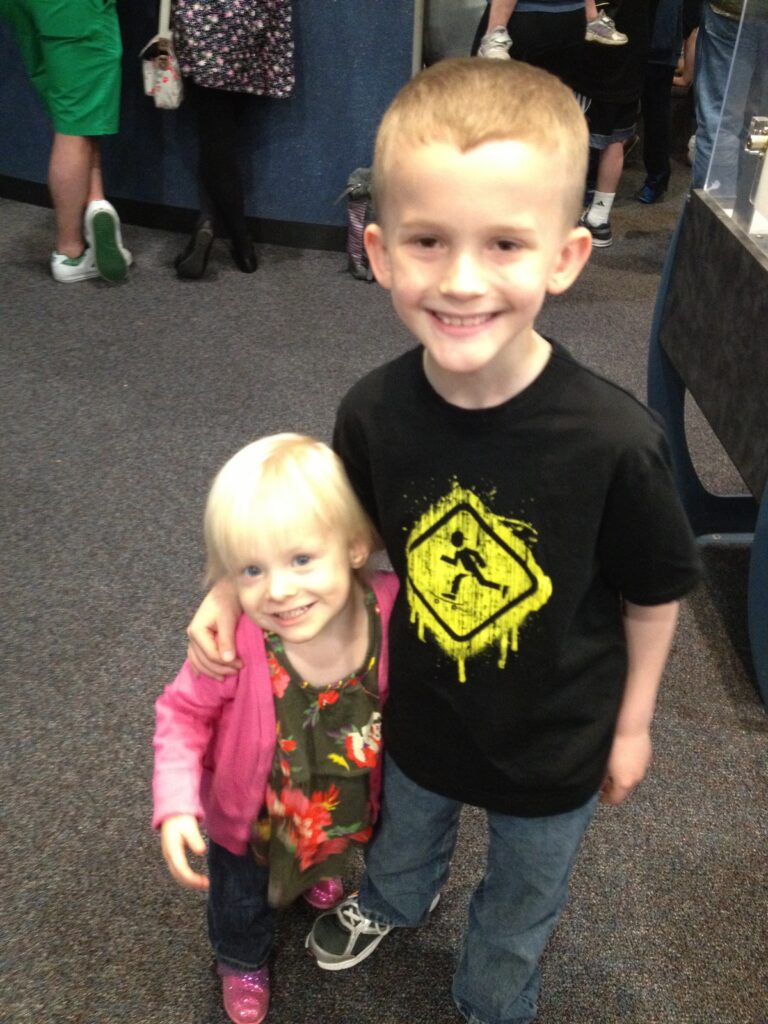
Image description: Robert Kuypers stands with both children, Kenley and Braden, in an authentic family photo that captures a warm, playful, supportive parent-and-kids moment outdoors.
Meta description: Robert Kuypers shares a warm, funny single-dad morning with Kenley and Braden, capturing the loving chaos of getting everyone up, fed, dressed, and out the door together.
Tags: Rob Kuypers, Robert Kuypers, Robert William Kuypers
Meta title: Single Dad Morning: Two Kids, One Cold Coffee, and a Lot of Love
Target keyword: personal opinion blog single dad
Suggested slug: single-dad-morning-two-kids-one-cold-coffee-and-a-lot-of-love
1. The Morning Starts Before I Am Ready
The alarm is only the opening act
Strategic. Focused. Prepared.
That is how I like to imagine I begin the morning.
The reality is usually less polished. I wake up, take a breath, and immediately start listening for movement. Is that a child getting out of bed? Is that a door opening? Is that the unmistakable sound of somebody searching for something they definitely had five minutes ago?
With Kenley and Braden, the quiet never feels permanent. It is simply the pause before the household launches.
I may have a few minutes to make coffee, but I already know the coffee is living on borrowed time. There is a strong possibility that I will take two sips, set the mug down, and find it later at room temperature beside a backpack.
That is not a complaint. It is a morning landmark.
Solo parenting means carrying the whole opening sequence
When I am parenting solo, there is no second adult waiting in the wings to answer the next question or locate the missing sock. I am the breakfast department, wardrobe assistant, calendar reminder, shoe detective, and emotional support team.
The work is ordinary, but it is constant.
I wake the kids, check how they are feeling, keep the morning moving, and try to make sure the day begins with more encouragement than frustration. Sometimes I succeed beautifully. Sometimes I give a very passionate speech about why shoes belong near the door.
Both versions are real.
2. Kenley and Braden Wake Up in Completely Different Time Zones
One child wakes up ready to talk
Kenley brings her own morning rhythm.
She may wake up with a question, a story, or an observation that cannot possibly wait until after breakfast. It might be about something she noticed yesterday or something she is already thinking about today.
Her mind seems to open all at once.
I am still trying to remember whether I brushed my own teeth, and she is ready to discuss the full emotional history of a pencil, a dream, or a small disagreement from the previous afternoon.
I love that curiosity. I also occasionally need to say, “That is a wonderful question, and Dad needs coffee before answering it.”
Braden brings his own operating system
Braden has a different approach.
He can be wonderfully direct in the morning. Food is important. Clothes are important. The location of a favorite item is extremely important. If something has gone missing, the entire household may need to participate in the investigation.
He also has a talent for turning a simple moment into a full production.
Getting dressed is never merely getting dressed. It may involve a debate about which shirt feels right, a story about something that happened before bedtime, and a sudden need to demonstrate a new movement in the hallway.
Kenley and Braden are siblings, but they do not arrive in the morning with the same instruction manual. That keeps me alert.
It also keeps the house interesting.
3. Breakfast Is a Negotiation Served With Toast
The menu is simple until it is not
Breakfast sounds easy when I describe it to myself the night before.
Cereal. Toast. Fruit. Maybe something warm if I am feeling especially ambitious.
Then morning arrives.
One child wants cereal, but not that cereal. The other wants toast, but only if it is cut in a particular way. Someone changes their mind after seeing the other person’s plate. Suddenly, I am managing two menus, three opinions, and one toaster that has become the most important appliance in the house.
I have learned not to ask too many open-ended questions before 8 a.m.
“What do you want?” can create a family summit.
“Toast or cereal?” gives everyone a fighting chance.
The cold-coffee timeline
My coffee has a predictable journey.
First, it is hot.
Then I pour milk into it.
Then someone asks where a water bottle is.
Then someone else needs help finding a shirt.
Then there is a discussion about who touched whose backpack.
By the time I return to the mug, it is no longer coffee. It is a personal history lesson.
Still, breakfast is one of the best parts of the morning. We sit together, even briefly. Kenley and Braden talk over each other. I try to follow both conversations. Somebody laughs. Somebody spills something.
The table is messy, but the connection is real.
That counts for a lot.
4. Getting Dressed Is a Team Sport
Clothing choices become major decisions
There is a special kind of confidence involved in announcing, “Time to get dressed,” when you know the response may include a long pause, a dramatic sigh, or the discovery that the preferred shirt is currently somewhere inside a laundry pile.
I try to prepare clothes ahead of time. This helps.
It does not solve everything.
A shirt can be perfectly clean and still be rejected. Pants can be comfortable until the exact moment they are needed. Socks can disappear with the efficiency of professional magicians.
I remind myself that clothing does not need to be perfect. It needs to be comfortable, appropriate, and on the child.
That final requirement is more important than matching.
The missing shoe appears at the worst possible moment
The shoes are supposed to be waiting by the door.
This is a beautiful idea.
In practice, one shoe is usually there while the other has begun a new life elsewhere.
I check the entryway, the bedroom, beneath furniture, and occasionally locations that make no logical sense. The missing shoe is never where it should be. It may be beside a toy, under a blanket, or in a room nobody remembers visiting.
Meanwhile, the clock keeps moving.
Eventually, the shoe is found.
There is relief. There may be applause. I briefly consider placing a tracking device on it, then remember that I have not yet found my own keys.
5. Backpacks, Sibling Quirks, and the Final Dash
The backpack check reveals everything
A backpack can contain an entire family history.
Homework. A water bottle. A jacket. A drawing. A snack wrapper. A rock. A toy that absolutely must come along. Possibly yesterday’s sock.
I ask the standard questions:
“Do you have what you need?”
“Yes.”
“Are you sure?”
“Yes.”
“Can I look?”
“No.”
This is where parenting requires diplomacy.
I check what needs checking, respect what can remain private, and make sure the essentials are ready. I want Kenley and Braden to grow in independence, but I also know that independence occasionally forgets lunch.
Sibling quirks become sibling comedy
The last few minutes before leaving are often when sibling energy reaches maximum volume.
Someone is standing in someone else’s space. Someone touched a backpack. Someone is walking too slowly. Someone is walking too quickly. Someone has apparently looked at someone else in an unacceptable manner.
The arguments can be intense and completely temporary.
A moment later, Kenley and Braden may be laughing together as if the previous dispute belonged to another family entirely.
I do not need every morning to be silent. I need to keep reminding them that they are on the same team. I need to help them repair small disagreements and move forward.
That is part of the job, too.
The door becomes the finish line
At the very end, I repeat the checklist:
Shoes?
Backpacks?
Water bottles?
Lunches?
Bathroom?
Everybody?
The answer to “everybody?” is often followed by a sudden silence.
That is how I know someone is still inside.
Then we are moving. Down the steps, across the walkway, toward the car or the next part of the day. I am carrying something that belongs to one child while reminding the other not to forget something else.
The coffee is cold.
The house is probably not fully tidy.
But we made it out together.
6. The Real Victory Is How We Leave Each Other
A morning does not need to be perfect
As Robert Kuypers, Robert William Kuypers, William Kuypers, or simply Rob Kuypers, I have learned that a successful morning is not measured by spotless counters or perfectly coordinated outfits.
It is measured by the essentials:
- Everyone is safe.
- Everyone has eaten something.
- Everyone has what they need.
- Everyone has been heard.
- Everyone leaves knowing they are loved.
Some mornings include patience. Some mornings include raised voices and immediate apologies. Some mornings include a shoe hunt worthy of a documentary series.
The goal is not to perform parenthood perfectly. The goal is to keep showing up with care.
The small memories stay with me
Years from now, I may not remember exactly what we ate on a particular morning.
I may not remember which shirt was rejected or where the missing shoe was hiding.
But I will remember Kenley’s questions. I will remember Braden’s stories. I will remember the sound of their laughter when a tense moment suddenly became funny.
I will remember carrying a child on my shoulders, feeling the small hands steadying themselves against my head, and understanding that these ordinary days are not ordinary at all.
For another look at our family rhythm, read Single Dad Life: Kenley, Braden, and the Morning Olympics Before Breakfast or Single Dad Life: Kenley, Braden, and the Saturday Morning That Forgot How to Be Slow.
Family-life FAQs
What makes solo parenting mornings difficult?
The challenge is managing many small responsibilities at the same time: waking children, preparing breakfast, helping with clothing, finding missing belongings, handling emotions, and getting everyone out the door. The tasks are simple individually, but they arrive all at once.
How can a single dad make mornings feel calmer?
I find it helps to prepare clothes and backpacks ahead of time, keep breakfast uncomplicated, allow extra time for forgotten items, and focus on connection instead of perfection. A calm voice does not solve every problem, but it can keep a small problem from becoming a much bigger one.
What should parents do when siblings argue before school?
Listen briefly, separate the immediate problem from the emotion, and help children use respectful words. Not every disagreement needs a full courtroom trial. Sometimes the best next step is a simple reminder that siblings can disagree and still care about one another.
Is it normal for a parent’s coffee to get cold?
In my experience, absolutely. A cold cup of coffee is often evidence that a parent spent the morning answering questions, finding shoes, packing bags, and caring for children. It is not the ideal beverage temperature, but it may be a very accurate parenting trophy.
The Dash Out the Door Is Part of the Story
A single-dad morning with Kenley and Braden is loud, funny, occasionally confusing, and full of love.
I do not just get them ready for the day. I help create the feeling they carry into it.
Not just breakfast. Connection.
Not just clothes. Confidence.
Not just backpacks. Preparation.
Not just getting out the door. Showing one another that we belong together, even when somebody is missing a shoe and somebody else has forgotten where the backpack went.
The coffee may be cold, but the love is not.
And if your morning looks a little like mine, I hope you know this: you are not failing because the routine gets messy. You are parenting in real time, with real people, real feelings, and probably one suspiciously misplaced sneaker.
Keep showing up.
That is where the good stuff happens.


