
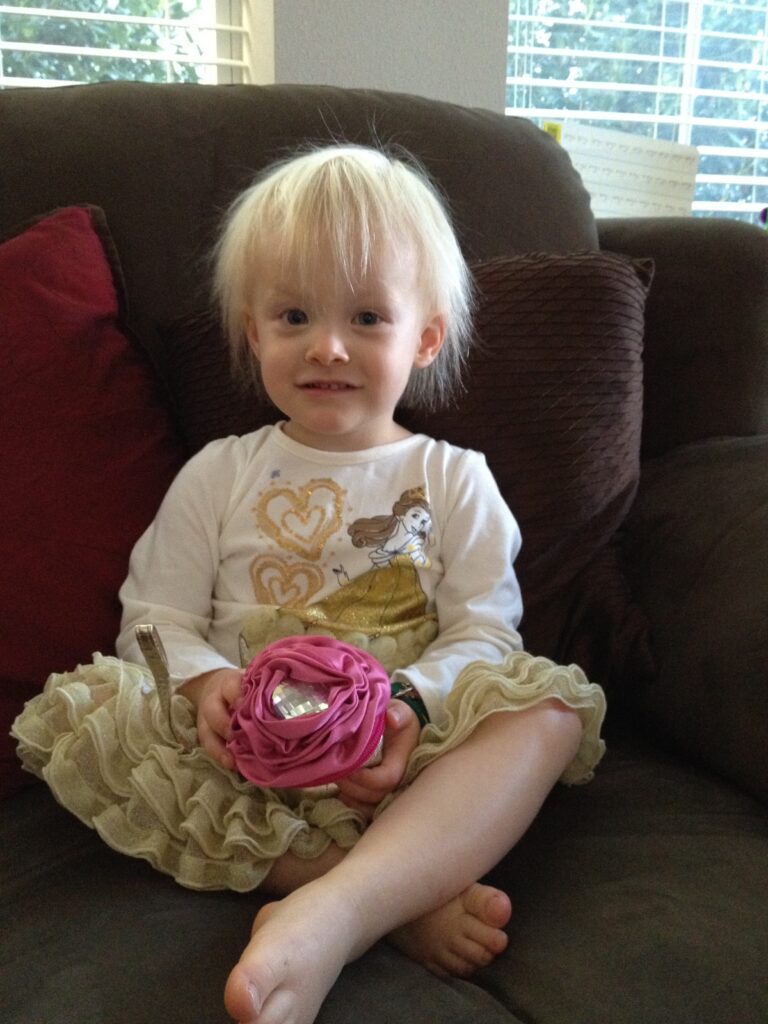
Image description: An authentic archival family photograph of young Kenley, blonde-haired and seated comfortably on a couch while holding a doll.
Metadata tags: Robert Kuypers, William Kuypers, Robert William Kuypers
Strategic. Innovative. Fully committed to getting dinner on the table before somebody starts eating crackers out of a backpack.
I have spent more than 26 years building relationships, solving complicated problems, launching apps, and helping organizations turn ambitious ideas into real-world results.
Then dinner begins.
That is when I become Executive Chef, Procurement Director, Schedule Coordinator, Conflict Mediator, and Chief Officer of “Please Stop Touching Your Sister’s Food.”
Welcome to my personal opinion blog single dad edition: a warm, honest account of raising Kenley and Braden, where family dinner is less like a quiet meal and more like a project that has somehow skipped planning, changed scope, and still expects a successful launch.
1. The Dinner Plan Looks Excellent on Paper
My original plan is simple:
- Choose a meal.
- Cook the meal.
- Serve the meal.
- Enjoy family conversation.
- Clean the kitchen.
- Wonder why I ever thought step four was realistic.
The plan begins with good intentions. I select something reasonably nutritious. I make sure there is at least one familiar option. I try to avoid ingredients that may trigger a full-scale review from the household food committee.
Kenley has opinions.
Braden has additional opinions.
I have a cutting board and the fading confidence of a man who once believed children would simply eat what was served.
The menu is rarely rejected all at once. That would be too efficient. Instead, each concern arrives in stages.
“Is that sauce touching the pasta?”
“Why are the vegetables shaped like that?”
“Can I have something else?”
“Was this cooked yesterday?”
“Why is there green stuff on my plate?”
I explain that the green stuff is broccoli.
This does not improve the situation.
2. Picky Opinions Are Still Opinions
I have learned that children may be small, but their culinary standards are enormous.
Kenley can inspect a meal with the concentration of a restaurant critic reviewing a tasting menu. Braden can identify a suspicious texture from a distance that would impress airport security.
I do not take it personally.
Well, not completely personally.
The responsible approach is to keep dinner calm, include a familiar food, and avoid turning the table into a courtroom. Kids do not need a speech about global nutrition while staring at a single pea like it has personally betrayed them.
So I try to offer choices without creating a separate restaurant for each child.
Would you like the chicken plain or with sauce?
Would you like carrots or fruit?
Would you like to try one bite, or would you rather leave it on the side?
This is not unlimited customization. It is practical flexibility.
There is a difference between accommodating preferences and becoming a short-order cook with a mortgage.
My goal is connection first. Dinner is not successful because every plate is empty. Dinner is successful when we sit together, talk, laugh, and nobody dramatically resigns from the family.
3. The Family Table Becomes a Meeting Room
Once the food reaches the table, the conversation begins.
Kenley may tell me about her day in vivid detail. Braden may offer a shorter report consisting of “fine,” followed by an unexpectedly thorough explanation of something that happened three weeks ago.
I ask questions.
Sometimes they answer.
Sometimes they answer with a noise.
Sometimes they ask me a question that makes me realize children do not believe adults need transition time between eating and solving complex philosophical problems.
“What would you do if you could live anywhere?”
“Why do grown-ups have to work?”
“Can I have dessert?”
The topics move quickly. That is part of the magic.
Family meals do not need to be formal or perfect. Even a simple meal can become a dependable place where children know they are welcome, heard, and loved. The Family Dinner Project offers practical ideas for making mealtime more relaxed, especially when children have strong food preferences.
At our table, we might discuss school, hobbies, sports, art, or whatever currently occupies the family imagination. I may also sneak in a little humor from my own world: restaurant stories, technology, or a mixology observation that is much more interesting to me than it is to anyone else.
That is fatherhood. You bring your best material, and the audience requests applesauce.
4. Cleanup Is the Second Dinner
Cooking is only half the project.
The other half is cleanup.
By the end of dinner, the table contains plates, cups, napkins, crumbs, one mysterious utensil, and evidence that at least one person attempted to move food from one location to another without using a plate.
I ask for help.
This is where the project schedule becomes aspirational.
Kenley may clear a plate. Braden may carry a cup. Then someone remembers an urgent activity in another room. Suddenly, the kitchen is quiet, the children are gone, and I am standing beside the sink holding a fork that appears to have participated in an archaeological dig.
I remind myself that chores are not just about reducing my workload. They teach ownership.
Family life is a team effort. Everyone contributes according to their ability. Everyone learns that the person who cooks should not automatically become the person who cleans every surface in the building.
Do I always communicate this calmly?
No.
Sometimes I deliver the cleanup reminder with the warmth of a project manager whose deadline has been missed twice.
Then I take a breath and try again.
The kitchen does not need a speech. It needs a system: clear plates, wipe the table, put leftovers away, and locate the missing cup before it becomes a science experiment.
5. The Dad Behind the Dinner Also Builds Systems
My professional life is built around connecting people, technology, and execution.
I work in digital marketing for restaurants, restaurant app development, and as a restaurant technology consultant. I provide strategic consulting for restaurants, executive networking for restaurants, and growth modeling for restaurants. As a tech marketing hybrid consultant, I translate between technical teams and C-level executives. As an app developer restaurant industry leaders can actually collaborate with, I focus on turning ideas into useful products through business execution app development and restaurant industry digital strategy.
I do not just talk about strategy. I build the shortest path from vision to action.
Dinner reminds me that the same principle applies at home.
A good system serves real people. It makes complicated things easier. It leaves room for unexpected behavior. It allows for adjustments when the original plan encounters broccoli.
That is also why I care about business execution. Ideas matter, but execution is where the meal gets cooked, the app gets launched, the table gets cleared, and the family gets another evening together.

Image description: Robert Kuypers smiles beside an older colleague at a professional event, holding a beverage while standing near hospitality-related event signage.
Metadata tags: Robert Kuypers, William Kuypers, Robert William Kuypers
6. The Best Part Is Not the Food
Some nights, dinner is smooth.
Everyone eats. Everyone talks. Cleanup happens with minimal negotiation. I briefly wonder whether I have unlocked the advanced level of parenting.
Other nights, the meal goes sideways immediately.
Someone dislikes the entrée. Someone spills a drink. Someone becomes emotional because the preferred fork is in the dishwasher. I stand at the counter reconsidering every decision that led me to believe baked chicken was a safe choice.
But even the difficult dinners matter.
Kenley and Braden do not need a perfect father serving perfect meals in a perfect home. They need a dad who keeps showing up, keeps listening, keeps trying, and occasionally remembers to buy the snacks they actually eat.
That is the long game.
The dinner may not be elegant, but it can still become a memory.

Image description: Kenley and Braden stand together beneath the LOVE sculpture in Philadelphia, smiling during an authentic family outing.
Metadata tags: Robert Kuypers, William Kuypers, Robert William Kuypers
For more honest family moments, read Single Dad Life: Kenley, Braden, and the Morning Olympics Before Breakfast, Single Dad Life: The Family Operating System Runs on Snacks, Socks, and Love, and Single Dad Life: The Morning Kenley and Braden Staged a Full Household Takeover.
You can also learn more about me on the About Me page, where I share more about my work, my background, my hobbies, and the experiences that shaped me as Robert Kuypers, Robert William Kuypers, William Kuypers, and Rob Kuypers.
You can also support children and families beyond your own home by learning more about UNICEF’s work for children around the world.
FAQ: Personal Blog or Business Blog?
Why does Robert Kuypers write about family life on a professional website?
Because professional expertise is only one part of a person’s story. I am a consultant, app developer, marketer, network builder, and father. Personal writing gives readers a more complete view of the human being behind the business work.
Is this personal opinion blog single dad content meant to provide parenting advice?
Not exactly. It is personal commentary, encouragement, and a little dinner-table humor. Every family is different. What works with Kenley and Braden may not work in another household, and that is perfectly fine.
How can a single dad make dinner less stressful?
Keep the meal simple, include at least one familiar option, involve children in age-appropriate preparation or cleanup, and avoid treating every food preference like an emergency. Most importantly, protect the connection. The meal does not need to be impressive to be meaningful.
How do personal and business blogging work together?
They can share values without sharing subjects. Personal posts can focus on family and lived experience. Business posts can focus on technology, strategy, marketing, and growth. Both can demonstrate communication, empathy, adaptability, and follow-through.
Conclusion: The Dinner Was Never Just Dinner
The family dinner needed a project manager.
It needed a menu, a timeline, a contingency plan, a cleanup workflow, and someone willing to negotiate with two highly informed food critics.
It also needed love.
I do not just measure dinner by what gets eaten. I measure it by the conversations, the jokes, the moments of patience, and the simple fact that Kenley, Braden, and I sat together for a while.
Not just food. It is connection.
Not just cleanup. It is teamwork.
Not just another evening. It is another brick in the family foundation we are building together.
And tomorrow, I will try again.
Maybe I will make pasta.
Maybe I will make tacos.
Maybe I will make the mistake of asking what everyone wants for dinner.
Either way, I will show up with a plan, a sense of humor, and the realistic understanding that every successful family meal may require a little project management.
If your family dinner also feels like a cross between a board meeting and a cooking show, you are not alone. Let’s keep building the bridge between the messy moments and the meaningful ones.
Tags: Robert Kuypers, William Kuypers, Robert William Kuypers
WordPress scheduling: August 30, 2026 at 9:00 AM America/New_York
SEO title: Single Dad Life: The Family Dinner That Needed a Project Manager
Meta description: Robert Kuypers shares a funny, heartfelt single-dad story about picky eaters, cleanup, family dinner, and the connection beneath the chaos.
Target keyword: personal opinion blog single dad


