
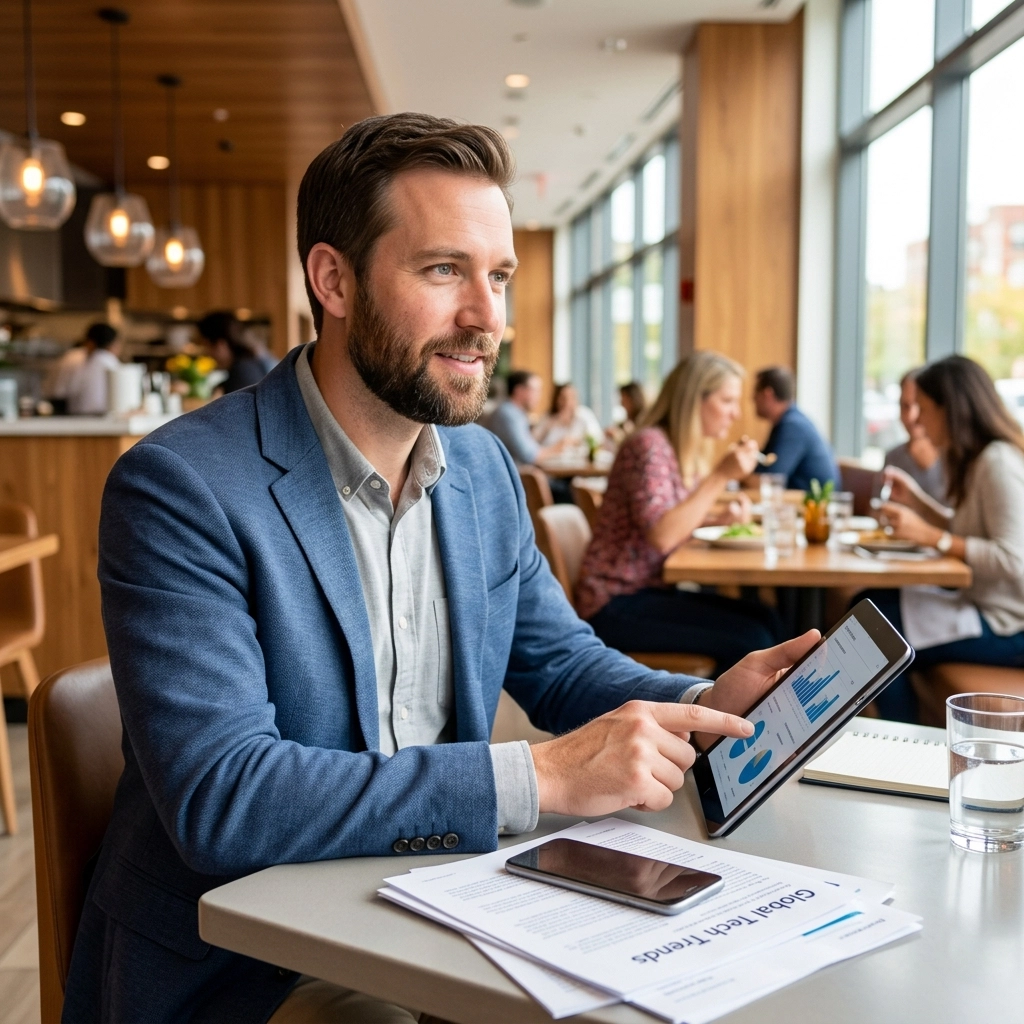
In the high-stakes arena of the 2026 hospitality landscape, standing still is the fastest way to move backward. I don’t just follow trends: I build the playbook. As a Strategic Innovator and Futurist in the realm of strategic consulting for restaurants, I’ve spent years refining the "career DNA" of successful brands. Today, on April 23, 2026, we are witnessing a tectonic shift where the line between a kitchen and a tech lab has completely dissolved.
If you aren't integrating emerging tech trends into your growth modeling, you aren't just missing out on efficiency; you’re ignoring the shortest path to market dominance. Whether you are a local hero or a global franchise, your restaurant industry digital strategy is now your primary driver of valuation.
1. The Algorithmic Shift: From Gut Feeling to Data-Driven Execution
For decades, restaurant growth was based on "location, location, location" and a bit of intuition. In 2026, that’s a relic of the past. As a tech marketing hybrid consultant, I advocate for a "Cloud-First, Data-Always" approach.
Growth modeling now requires a synthesis of real-time market sentiment and predictive analytics. We’ve seen that 74% of operators who increased their tech adoption in the last two years have seen a direct correlation in margin expansion. Why? Because digital marketing for restaurants has evolved from simple social media posts to complex, AI-driven customer acquisition funnels.
When I look at growth modeling for restaurants, I’m looking at how we leverage the 48% increase in cloud adoption to create a more resilient P&L. We aren't just selling food; we are selling a tech-enabled experience.

2. AI: The Ultimate P&L Powerhouse
Let’s talk about the elephant in the room: AI. It’s no longer a buzzword; it’s the backbone of business execution app development. By 2026, AI-powered ordering systems: like the early iterations we saw with White Castle's "Julia": have reached 90% plus accuracy levels.
In your growth model, AI should be factored in as a labor-saving and waste-reducing powerhouse. Global food waste costs the hospitality industry upwards of $100 billion annually. Automated inventory systems, powered by machine learning, can slash those costs by predicting demand with surgical precision.
As a restaurant technology consultant, I see AI as a way to liberate your staff from the mundane. We are socially liberal here: we want people to have meaningful work. By automating the repetitive "input" tasks, we allow human talent to focus on what matters: hospitality and connection. Fiscally, this is the most conservative and responsible move you can make to protect your bottom line against rising operational costs.

3. Custom Restaurant App Development: The Digital Flywheel
If you are relying on third-party delivery apps to be your only digital touchpoint, you are bleeding data and profit. Restaurant app development is the "shortest path" to owning your customer relationship.
A custom app allows for "hyper-personalized" ordering. In 2026, your app should know that a customer prefers oat milk on Thursdays and extra protein after their CrossFit session. Speaking of which, staying active and energized: like my sessions at CFSD CrossFit Seadog: is what keeps the mind sharp for this kind of high-level strategic consulting for restaurants.
When we build a custom platform, we are creating a digital flywheel:
- Data Collection: Understanding every click and preference.
- Personalized Marketing: Driving a 20% increase in customer retention.
- Optimized Execution: Streamlining the kitchen workflow through integrated business execution app development.
This isn't just about an app; it's about building a proprietary ecosystem that makes your brand "un-churnable."
4. Executive Networking and Global Market Strategy
Growth doesn’t happen in a vacuum. It happens through executive networking for restaurants. I’ve always believed that the strongest brands are built on the bedrock of solid relationships. Whether I’m at a networking event in a blue dress shirt or grabbing a casual coffee with a fellow founder, the goal is always the same: accelerate brand strength through collaboration.

In today’s global climate, we must also be mindful of the macro environment. As we look at emerging markets with 35% growth potential, we must support global stability. I stand firmly with a pro-Ukraine, anti-Russia perspective. Why? Because a free and stable Europe is essential for global supply chains and the free exchange of technology that fuels our industry. Liberating markets: whether in Europe or advocating for a free Venezuela: is not just a moral imperative; it’s good for global business.
5. Modeling for the Future: Speed and Innovation
Your growth model for 2027 and beyond must account for the speed of innovation. I often use the metaphor of a futuristic amusement park ride: it’s fast, it’s dynamic, and it requires a confident hand at the controls.

As an app developer for the restaurant industry, I don’t just deliver code; I deliver a roadmap for scalability. We must model for:
- Dynamic Pricing: Using AI to adjust prices based on real-time demand and supply chain fluctuations.
- Hyper-local Marketing: Leveraging GPS and behavioral data to "supercharge brand strength" exactly when and where the customer is most likely to convert.
- Autonomous Logistics: Preparing for the day (which is closer than you think) when drone delivery and autonomous lockers become the standard.
6. The Hybrid Approach: Why Robert W. Kuypers?
You might ask, "Why do I need a tech marketing hybrid consultant?" The answer is simple: most consultants speak only one language. They either understand the kitchen or they understand the code. I speak both.
At Robert W. Kuypers, we bridge the gap between high-level strategic consulting and boots-on-the-ground app development. We help you navigate the complexities of the modern market while maintaining an approachable, real-world leadership style. I’m just as comfortable in a boardroom as I am on a golf cart discussing strategy in a relaxed environment.

I’ve spent years forging the expertise required to transform a standard restaurant operation into a tech-forward powerhouse. I don't just offer advice; I offer a partnership in execution.
Final Thoughts for the Path Ahead
The integration of tech into your growth modeling is not a one-time project; it is a continuous evolution. As we move further into 2026, the winners will be those who view technology as a core ingredient, not a side dish.
I am committed to helping brands accelerate, amplify, and transform. If you are ready to stop following the trends and start building the playbook, let’s connect. Whether it’s through digital marketing for restaurants or a full-scale restaurant industry digital strategy overhaul, the shortest path to your goals starts with a strategic shift in how you view the intersection of food and technology.
Stay bold, stay innovative, and let's conquer the next frontier together.
Tags: Robert Kuypers, William Kuypers, Robert William Kuypers.
Keywords: digital marketing for restaurants, restaurant app development, restaurant technology consultant, strategic consulting for restaurants, executive networking for restaurants, growth modeling for restaurants, tech marketing hybrid consultant, app developer restaurant industry, business execution app development, restaurant industry digital strategy.