
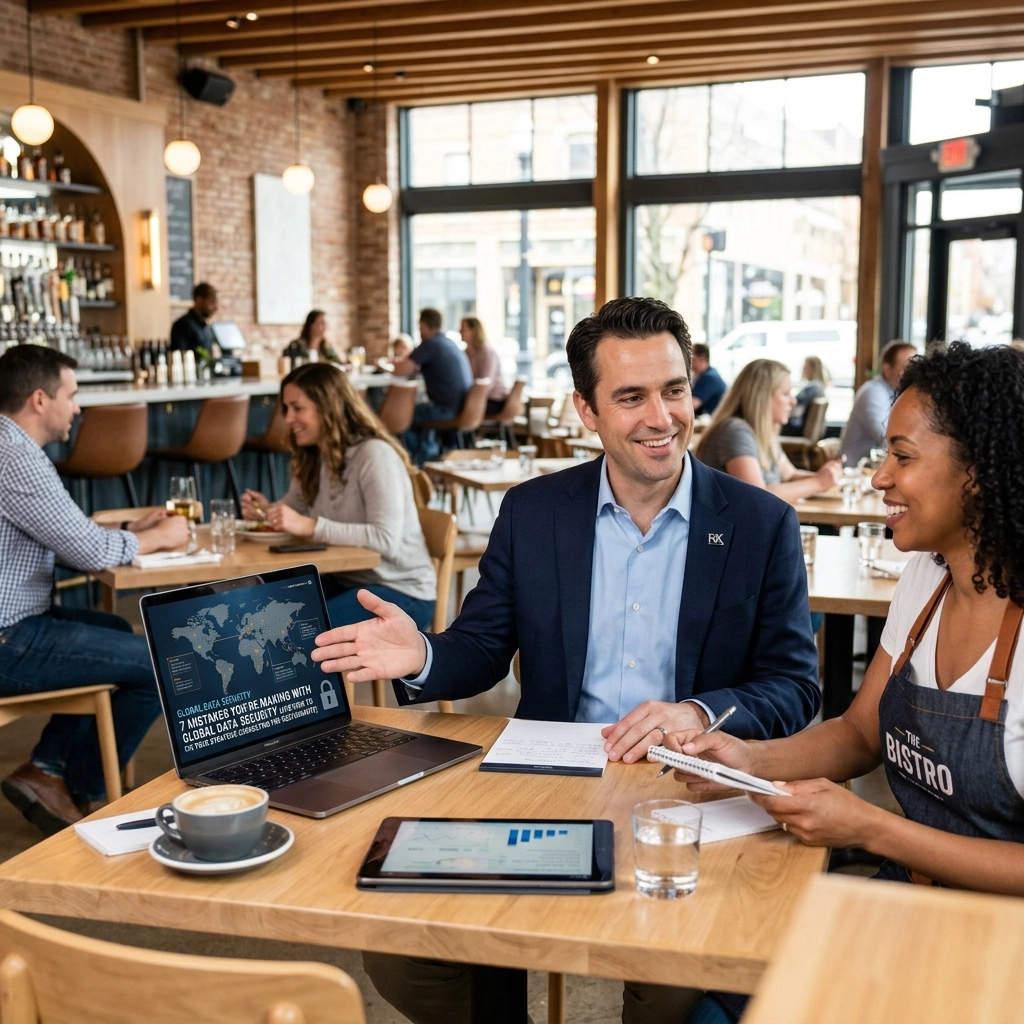
As a Strategic Innovator and Futurist in the tech-marketing space, I don’t just observe the digital landscape; I architect the fortress. In 2026, the intersection of hospitality and high technology isn’t a luxury: it’s the front line of a global data war. If you think your restaurant group is "just" selling pasta or Wagyu, you’re missing the forest for the truffles. You are a data clearinghouse.
I have spent years honing the career DNA required to bridge the gap between complex software engineering and high-level business execution. I don’t just follow trends: I build the playbook. Today, on April 21, 2026, the news is dominated by the fallout of the latest Eastern European cyber-offensive, reminding us that global data security is a physical-defense issue as much as a fiscal one. My stance is clear: we must be fiscally conservative with our resource allocation but socially liberal in how we empower our teams through technology. We stand for a free, secure digital world: one that rejects the aggressive cyber-tactics of authoritarian regimes like Russia and supports the democratic resilience of nations like Ukraine.
Here are the 7 catastrophic mistakes I see in strategic consulting for restaurants today, and how to supercharge your brand strength by fixing them.
1. Overlooking AI-Driven Privacy Risks in App Development
In the rush to implement the latest "AI Waiter" or predictive ordering systems, many brands are failing at the most basic level of restaurant app development. AI models in 2026 are hungrier than your Friday night rush; they consume data to learn. If your app isn’t built with strict data-siloing, your customers' private dining habits and payment metadata could be training a third-party LLM without your consent.
I’ve seen "growth experts" plug in off-the-shelf AI tools that leak proprietary business logic directly to competitors. As an app developer for the restaurant industry, I advocate for "Clean Room" AI environments. Don't let your guest's data become the fuel for someone else's machine.
2. Neglecting Real-Time Security Intelligence
The days of "set it and forget it" firewalls ended in the early 2020s. If your restaurant technology consultant isn't talking about real-time threat detection, they’re handing you a paper shield. Global data security today requires constant, active monitoring.
We are seeing a rise in "Slow-Drip" data exfiltration where bad actors (often state-sponsored entities looking to destabilize Western consumer markets) take tiny bits of data over months. I leverage continuous risk intelligence to ensure that digital marketing for restaurants isn't just about getting clicks, but about maintaining the sanctity of the customer relationship.

3. Underestimating the Human Element (The "Not My Job" Virus)
I am a self-proclaimed tech guru, but even I know that the most sophisticated code can be undone by a single weak password at a hostess stand. Underestimating human risk is the shortest path to a PR nightmare.
In my work, I don't just deliver code; I deliver culture. Executive networking for restaurants isn't just about finding the next big investor; it's about building a network of leaders who understand that security is a top-down mandate. Training your staff to recognize social engineering is just as important as training them on the new POS system. I strive to make security accessible, not scary.
4. Ignoring "Privacy by Design" in Growth Modeling
Most growth modeling for restaurants focuses purely on CAC (Customer Acquisition Cost) and LTV (Lifetime Value). They forget the "Compliance Tax." If you build a massive database of guest preferences without "Privacy by Design," you are building a liability, not an asset.
When I lead business execution app development, we bake encryption and anonymity into the architecture from Day One. It is much cheaper to build a secure house than to try and retroactively waterproof a basement that’s already flooded.
5. Misjudging Third-Party Vendor Risks
Your restaurant is only as secure as the weakest app in your stack. Whether it's a third-party delivery integration or a loyalty program plugin, these are often the "back doors" used by cyber-aggressors.
As an anti-war advocate who believes in strong self-defense, I view your digital perimeter as a sovereign territory. We must be skeptical of software origins. In 2026, sourcing your tech from regions that do not respect international data laws is a fiscal suicide mission. I help my clients audit their vendors to ensure every link in the chain is as strong as the brand itself.

6. The Failure of the "Siloed" Consultant
The biggest mistake? Hiring a marketing guy who doesn't understand code, or a coder who doesn't understand margins. To survive the current global climate, you need a tech marketing hybrid consultant.
I accelerate brand growth by speaking both languages. I can talk API integrations with your dev team in the morning and pivot to ROI-based digital marketing for restaurants by lunch. If your strategic consulting doesn't bridge these worlds, you’re paying for half a brain. I don't just follow the map; I’m the one drawing the topography.
7. Lack of Continuous Compliance Adaptation
Regulations like the 2026 Global Data Privacy Act (GDPA) move faster than most restaurant groups can react. Relying on an annual audit is like checking the weather once a year and assuming you’re prepared for a hurricane.
Fixing your restaurant industry digital strategy means moving to a model of continuous compliance. I leverage automated tools to ensure that as your business scales, your legal and security protections scale with it. It’s about building a resilient, agile organization that can pivot when the next global shift occurs.

Why Business Execution Matters Now
I’ve always said that a vision without execution is just a hallucination. In the restaurant world, we are seeing a massive "cleansing" of brands that refused to modernize. They treated tech like a side dish instead of the main course.
My approach to strategic consulting for restaurants is rooted in the belief that we must be bold. We must be willing to dismantle old, insecure systems to make way for the future. Whether I'm playing a round of golf to discuss high-level mergers or sitting down for a "deep-tech" dive into a new app's backend, my goal is the same: to amplify your potential and accelerate your success.

The Path Forward: Forge Your Digital Fortress
We are living in an era of unprecedented opportunity and unprecedented risk. The "peace-through-strength" doctrine applies to your data just as much as it applies to global geopolitics. By addressing these seven mistakes, you aren't just "fixing" your IT; you are transforming your brand into a leader of the new economy.
I don’t just offer advice: I offer a partnership in transformation. Let’s stop talking about "digital strategy" as a buzzword and start treating it like the core of your business execution. The world is watching, and the guests are waiting. Let’s give them something secure, innovative, and truly world-class.
If you’re ready to stop making these mistakes and start building the future, visit our site to see how we can transform your restaurant group today.
Tags: Robert Kuypers, William Kuypers, Robert William Kuypers.